Tuesday, 9 October 2012

Moghul arch from the amber fort, Jaipur  Arco moghul de fuerte ambar, Jaipur 
typical street scene in the Punjab  Escena callejera, tipica del Punjab
Yummy, this is me for two months Esto soy yo por dos meses
Christchurch. Shimla or Surrey ?
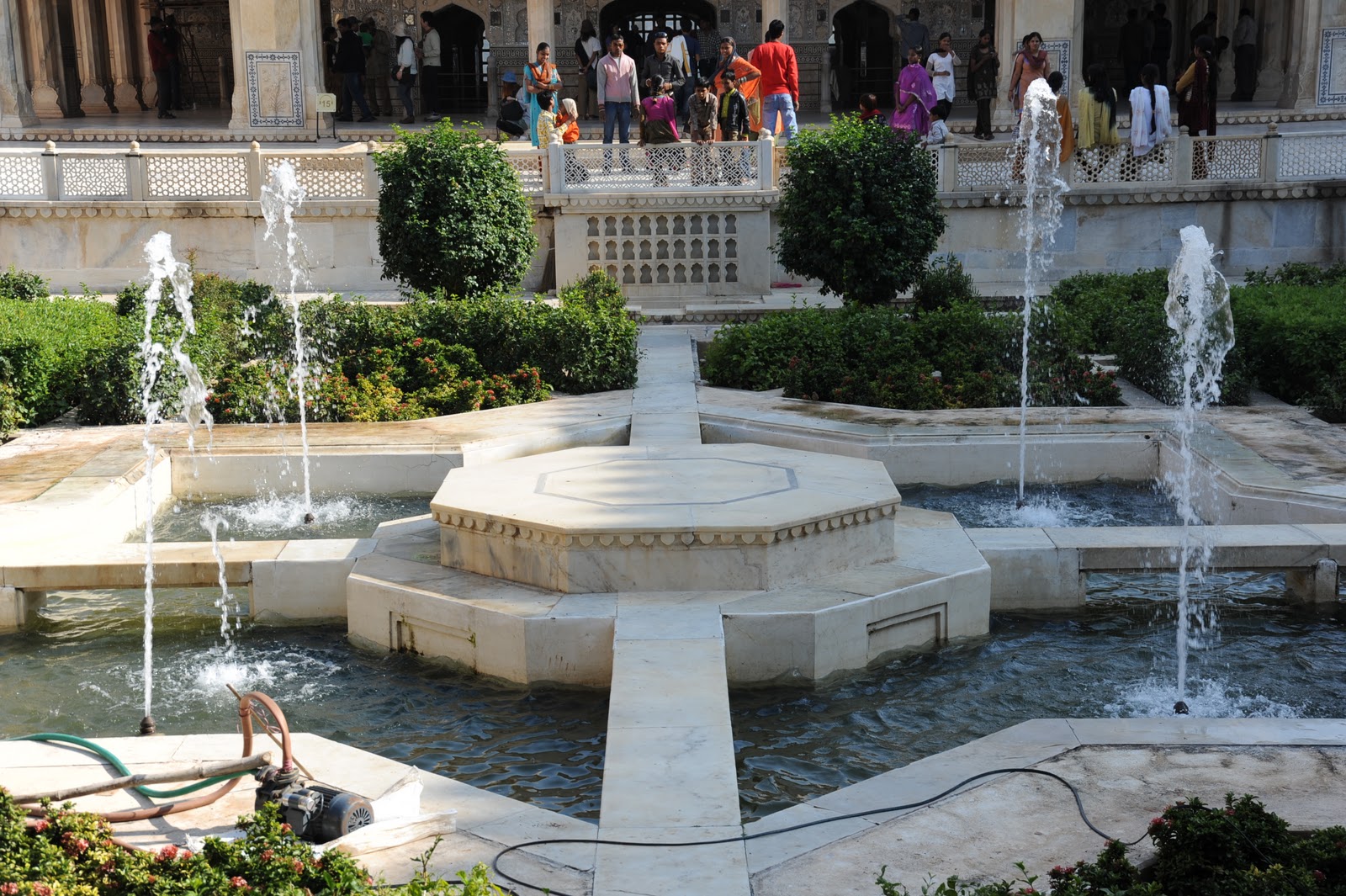
The royal gardens at the amber fort
Los jardines reales en el fuerte ambar

BACK TO INDIA AND NEPAL

Two years ago I headed off from Delhi, north to Shimla, the capital of the Himachal Pradesh and then onto Manali via Mandi and Kullu. I was unable to go further due to the winter snows that prevented me going overland to Kashmir. I ended up going into the Punjab, visiting Amritsar, Chandigargh and Ludhiana. The night train took me from Ludhiana to Jaipur, the capital of the desert state of Rajastan, where after a few days I had to unexpectedly curtail my trip and return home. Now I return including Nepal and southern India. That at least is the general idea, but you know what John Steinbeck said about the best laid plans of mice and men..... Anyway, the trip should last from the begining of november to the begining of january, armed with my toothbrush and two books ( The tao of travel by Paul Theroux and The art of war by Sun Zhu ), not forgetting my beloved Nikon I will be tapping( and snapping ) an account of my exploits. I am including unseen pics of my last trip to get you in the mood and will announce on facebook whenever I make a new entry.

Hace dos años me marche norte desde Delhi a Shimla, la capital del Himachal pradesh y de ahi hasta Manali via Mandi y Kullu. Me fue imposible seguir por tierra hacia Cachemira por la nieve invernal. Acabe tirando hacia el Punjab, visitando Amritsar, Chandigargh y Ludhiana. El tren nocturno me llevo de Ludhiana a Jaipur, la capital del estado desertico de Rajastan, donde despues de unos dias tuve que acortar inesperadamente mi viaje y volver a a casa.Ahora vuelvo incluyendo a Nepal y el sur de la India. Eso por lo menos es la idea general, pero ya saben lo que dijo John Steinbeck de los mejores planes de hombres y ratones...... De todas formas el viaje deberia durar de principios de noviembre hasta principios de enero, armado solo con un cepillo de dientes y dos libros ( El tao de viajar por Paul Theroux y El arte de la guerra por Sun Zhu ), sin olvidarme de mi querida Nikon estare tecleando ( y disparando ) un diario de mi periplo. Incluyo fotos no vistas de mi ultimo viaje para animaros y anunciare en facebook cada vez que tenga algo que contar. Para los españoles no olvideis que como voy a estar usando ordenadores de habla inglesa, los acentos, eñes y elles van a tomar por culo. Lo siento, pero es lo que hay.

Tuesday, 11 January 2011

TERMINAL 3


with ear infection and dogbite maddog limps toward terminal 3(photo by Doff Minguillon)


THE END IN WHICH MADDOG IS BITTEN BY A MADDOG

We left in the five o clock cool of the Jaipur morning. It was just as well we did as the day proved to be a hot one. We made two stops to breakfast and to take chai just outside Delhi city limits. I noticed him rather nervous as he changed into some sort of cab drivers uniform. He explained that the Delhi police harass and fine indiscriminatley taxis from outside, accusing them of plying for trade within the city( which is forbidden), even if they are only dropping a fare off. Understandabley, he refuses all offers of chai and after shaking hands, stuffing his 6000 rupees into his pocket, he roars off in a cloud of autumnal Delhi smog. Behind me beaming and dapper is Shayam( born in Cheltenham, you know) inviting me into his office in connaught circus. After explaining my situation to him and the need for celerity as regards a flight out, in the time it took to get trough three cups of chai, I had a flight nextday at midday on with Jet airways, a first class suite at the residencey in Karol Bagh (check out the Nikons) and my original driver, who drove me to Shimla to ferry me about town collecting my stuff. You've got to be happy with that. Thank you Shayam and I'll see you in november all being well. Nothing more to say except that I picked up my goods from the tailor, had a healing night before another of Shayam lads took me to the airport the next day and so on to home. However, one last thing before I end my missive is that in all those weeks in a third world country I never got hurt, run over, went down with anything, not so much as a loose stool. Yet within days of getting to the UK, I develop an ear infection, get bitten by a lunatic Staff and end up having to be innoculated for tetanus and follow a course of antibiotics. Just goes to show.

   THIS BLOG IS DEDICATED TO THE LOVING MEMORY OF MY FATHER
     FEDERICO  LEON  MINGUILLON  27,AUGUST, 1942- 17, SEPTEMBER,
2009                                                                                                                                              

Salimos de Jaipur con el frescor de madrugada y menos mal, con el calor que se fue desarollando a lo largo de la mañana. Hicimos dos paradas: una para desayunar y otra para tomar un chai, que mi conductor aprovecho para cambiarse a su " uniforme taxista". Me fije que ya hacia tiempo que le veia nervioso al acercarnos a Delhi y se lo dije. Me explicó que la policia de Delhi acosa a los taxistas de fuera, multándolos injustamente, acusandoles de trabajar en la zona sin permisos, aunque solo esten trayendo a  alguien de afuera. Con razón, se negó a tomar ningún chai de despedida. Dió la mano, metió sus 6000 rupias en el bolsillo, a continuación tocó a su Ganesha del salpicadero y desapareció en una nube de contaminación. Detrás de mi estaba el sonriente Shayam( nacido en Cheltenham sabes) invitándome a su despacho en Connaught circus. Le explico mi dilema y que urge la celeridad para llegar a casa,  sobre unos inevitables chais. Al acabar el tercero, ya tenia un vuelo con jet airways directo, mañana al mediodia, rumbo a Heathrow directo, tenia una suite de puta madre( mira las Nikons) en el Residencey, en el barrio Karol Bagh y tenia mi conductor que me llevó a Shimla, Shashe, a llevarme por Delhi a hacer mis últimos preparativos. Tienes que estar contento con eso. Gracias Shayam y te veré en Noviembre. Despues ya no hay mucho más que contar, excepto que tuve una noche reparadora y por la mañana Shayam mandó unos de sus chicos a llevarme al aeropuerto y a casa. Una última cosa antes de terminar mi misiva,  es que en todas esas semanas, en un pais del tercer mundo, nunca llegué a lastimarme, no me atropellaron, nada me mordió, no padecí de ninguna molestia, ni siquiera un conato de cagada suelta. Sin embargo, a los dias de llegar al Reino Unido, pillé un infección de oido, .... me muerde un Staff lunatico.... provocando una visita a urgencias con vacunas contra tetanos y lo demás y un curso de antibioticos. Para que veas.

ESTE BLOG ESTA DEDICADO A LA MEMORIA DE MI QUERIDO PADRE
 FEDERICO  LEON  MINGUILLON  27 AGOSTO 1942 -- 17  SETIEMBRE  2009

SUITE IN THE RESIDENCEY, KAROL BAGH


My suite at the Residencey 


Sunday, 12 December 2010

HAWA MAHAL

The Hawa Mahal or palace of the winds was built in 1799 by Maharjah Sawai Pratap Singh, and designed by Lal Chand Usta in the form of the crown of Krishna, the hindu god. Its five storey exterior has 953 small windows called " jharokhas " that are decorated with intricate lattice work. The interior of the lattice work was to allow the royal ladies to watch the world go by, down below without being seen, since they had to observe strict "purdah" (face cover).
Built from red and pink sandstone, the palace is situated on the main thoroughfare, in the heart of Jaipur. It forms part of the city palace, and extends to the "zenana" or womens chambers.

El Hawa Mahal o palacio de los vientos fue construido en 1799 por el Majaraja Sawai Pratap Singh y disenado por Lal Chand Usta en la forma de corona del dios hindu, Krishna. Su exterior de cinco plantas tiene 953 ventanas llamadas " jharokhas " decoradas con un enrejado complejo. El interior del enrejado era para permitir las mujeres reales ver el mundo afuera sin ser vistas, ya que tenian que observar "purdah" estricta (cara tapada).
Construido de piedra arenisca roja y rosa esta ubicada en la calle principal del centro de Jaipur. Forma parte del " City Palace ", y extiende hasta la " zenana " ( aposentos femeninos ).


THE AMBER FORT

The Amber fort is located 11km from the centre of Jaipur. It is known for its unique style, blending both hindu and muslim (Mughal) elements. The fort borders the Maota lake and was built over an earlier structure, although the palace, such as it is today was commenced by Raja Man Singh around 1592. The initial structure of the fort was completed by his descendant Jai Singh I and was modified by succesive rulers over the next 150 years.
The structure which is known as "Amber Fort" was initially a palace complex within the original fort that is today known as Jaigarh fort. Amber fort is constructed from red and white sandstone. The fort contrasts from a rugged, defensive exterior to an ornate and lavish interior decorated in both hindu and muslim styles. The walls of the interior of the fort are covered with murals and frescoes depicting everyday life. I will let the Nikons do the rest of the work.

El Fuerte Amber esta ubicado a 11km del centro de Jaipur. Es conocido por su estilo unico, combinando elementos hindu y musulman (Mughal). El fuerte esta alado del lago Maota y fue construido sobre un emplacamiento anterior, aunque el palacio, tal y como esta hoy lo empezo Raja Man Singh alrededor de 1592. La estructura inicial del fuerte fue terminado por su descendiente Jai Singh I y fue modificado por soberanos sucesivos durante los proximos 150 anos.
La estructura conocida como el "Fuerte Amber" era inicialmente un palacio dentro del fuerte original conocido hoy como el fuerte Jaigarh. El Fuerte Amber esta construido de piedra arenisca roja y blanca. El fuerte contrasta de un bruto y defensivo exterior a un interior abundante y vistoso decorado con estilos hindues y musulman. Las paredes del interior del fuerte estan cubiertos con murales y frescos mostrando la vida cotidiana. Dejare que las Nikons acaben el trabajo.


THE JANTAR MANTAR

The Jantar Mantar is a collection of architectural astronomical instruments built by the Maharajah Jai Singh II at his new capital between 1727-1734. He had a total of five constructed(one being in Delhi), but it is the one in Jaipur which is the largest and best preserved. The name comes from Jantar(instrument) and Mantar(formula).
The observatory consists of 14 major geometric devices for measuring time, predicting eclipses, tracking stars' locations as the earth orbits around the sun, ascertaining the declinations of planets and determining the celestial altitudes and related ephemerides. Each is a fixed and 'focused' tool.
The Samrat Yantra, the largest instrument is 27m high, its shadow carefully plotted to tell the time of day. Its face is carefully angled at 27o, the latitude of Jaipur. The Hindu Chhatri(small cupola) on top is used as a platform for announcing eclipses and the arrival of monsoons.
Built from local stone and marble, each instrument carries an astronomical scale, generally marked on the marble inner lining. Bronze tablets, all extraordinarily accurate, were also employed. Thoroughly restored in 1901, the Jantar Mantar was declared a national monument in 1948.

El Jantar Mantar es una coleccion de instrumentos architecturales astronomicos construidos por el Majaraja Jai Singh II en su nueva capital entre 1727-1734. Hizo construir cinco(uno esta en Delhi), pero el de Jaipur es el mas grande y mejor conservado. El nombre viene de Jantar(instrumento) y Mantar(formula).
El observatorio consiste en 14 aparatos geometricos para la mediacion del tiempo, la prediccion de los eclipses, el seguimiento de las ubicaciones de las estrellas en su trayecto alrededor del sol, la determinacion de las declinaciones de los planetas y la determinacion de las altitudes celestiales y efimerides relacionadas. Cada una es un instrumento fijo y 'enfocado'.
El Samrat Yantra, es el instrumento mas grande con 27m de altura, su sombra cuidadosamente trazada para dar la hora del dia. Su cara angulada a 27o, la latitud deJaipur. El Hindu Chhatri(pequena cupula) en la cima es usada como plataforma para anunciar eclipses y la llegada de monsones.
Construida de piedra y marmol local, cada instrumento tiene una escala astronomica, generalmente marcada en el reborde de marmol interior. Tablas de bronze, todas extraordinariamente precisas, tambien fueron empleadas. Totalmente restaurado en 1901, el Jantar Mantar fue declarado monumento nacional en 1948.


TEXTILES, BLOCK PRINTING AND SARIS

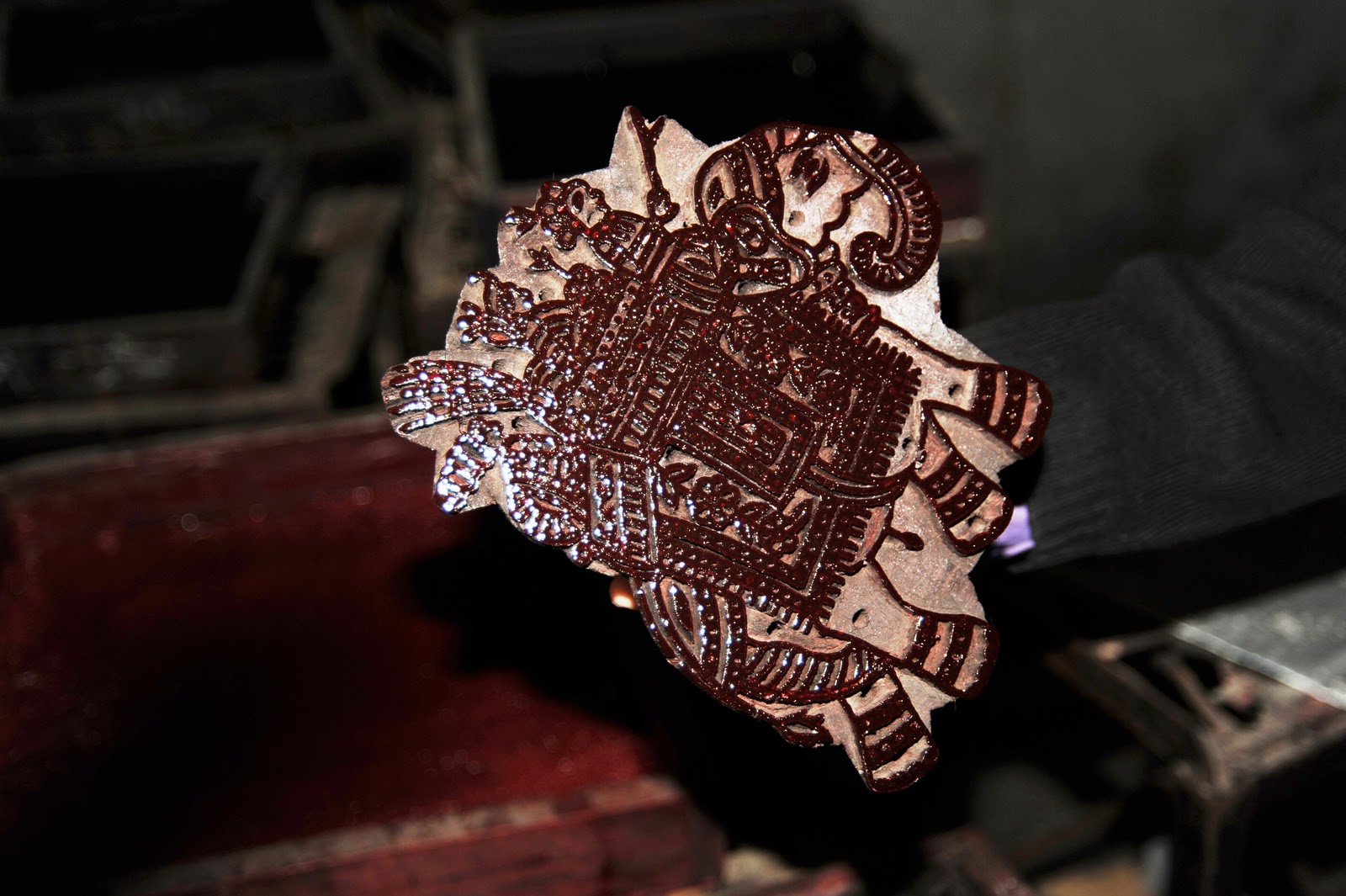
In between the Gatore crematorium and the water palace, I got Abdullah to take me to the Moghul textile emporium, where apart from being able to purchase anything textile( wall hangings, carpets, saris, bedspreads and made to measure suits, in any type of material etc), you have the opportunity to see the artesans in action.In the first photos you will see the various stages of 'block printing'. This involves the stamping of an image(in this case an elephant), using five different stamps, carved from teak and superimposing them one after the other with an incredible precision, using different colour vegetable dyes. The finished print is then rinsed first in salt water and then in fresh water. The result being a multicoloured image, which will not fade or shrink when washed.This is done on a variety of materials from cotton, muslin and silk. The following images show the detailed sewing of various beads and mirroirs to produce anything from wall hangings to bed clothes and cushions, to produce unique, one-off images of Ganesha, the elephant god. After spending a good two hours watching and buying, I asked Abdullah to take me back to the hotel.
It was here that I made an executive decision to return home. There were several factors in my decision to cut short my visit. The first was that my father in law's illness had taken a drastic turn for the worse and I felt it my moral duty to be next to my wife for what could be a difficult few days?, weeks? ahead, especially in this festive period( which I personally loathe, which was one of the reasons I came to  India at this time of the year); another one was after just four weeks the misery and suffering which I was seeing on a daily basis was begining to affect me deeply, seeing how the so called ' untouchables' were living daily in the most abject conditions was bringing me down day by day. Another very important factor was that I was losing weight at an alarming rate(4kg in as many weeks). I told Abdullah this and he said that he would drive me to Delhi to grab the earliest flight I could arrange. I said that this was cool, but that I still had two important visits I had to make and that we would leave for Delhi the day after tomorrow.

Entre el crematorio Gatore y el palacio de agua, le hice a Abdullah llevarme al emporio textil Moghul, donde aparte de poder comprar qualquier elaboracion textil(colgantes para la pared, alfombras, saris, juegos de cama y hasta trajes hechos a medida de qualquier genero etc) tienes la oportunidad de ver los artesanos en su trabajo. Las primeras fotos que se ven son  las varias etapas de'imprimir con bloques'. Esto consiste en el marcar con estampilla( en este caso un elefante), usando cinco estampillas diferentes, esculpidos de teja y sobreponiendolos uno encima del otro con una exactitud impresionante, usando tintes vegetales de colores diferentes. El estampido acabado se lava primero en agua salada y despues se aclara en agua fresca. El resultado es un imagen de multicolor, que ni se destine o encoje al lavar. Esto se practica en varios generos desde algodon, muselina y hasta en seda. Los siguientes imagenes muestran el cosido detallado de varios tipos de adornos y espejos para decorar qualquier adorno, desde colgantes para la pared, ropa de cama, y cojines para producir imagenes unicos del dios elefante Ganesha. Despues de haber pasado unas dos horas observando y comprando, le pedi a Abdullah que me llevase de vuelta al hotel. Fue aqui donde decidi tomar la decision ejecutiva de volver a casa. La primera, mas importante razon era que la enfermedad de mi suegro habia empeorado drasticamente y decidi que era mi deber estar alado de mi mujer para lo que serian unos dias? o  semanas? importantes, sobre todo en esta epoca navidena(que yo personalmente abhorrezco y por eso decidi venirme a la India en estas fechas); otra razon era que despues de quatro semanas la miseria y sufrimento de que era testigo a diario me estaba empezando afectar profundamente, viendo como los llamados 'intocables' vivian en las condiciones mas miserables, que ningun ser humano tiene porque aguantar me estaban causando una depresion indescriptible. Otro factor muy importante a nivel personal, es que estaba perdiendo peso a una velocidad alarmante(4kg en tantas semanas). Se lo dije a Abdullah y me dijo que me llevaria a Delhi a coger el primer vuelo que yo podria organizar. Le dije que bien, pero que aun tenia que hacer dos visitas importantes y que saldriamos pasado manana.