Monday, 15 April 2013

Pokhara, 7/11/2012. Arrival 21,00

Although it only cost 350 nepalese rupees, about 3,30 euros, it cost me 8 hours of my life. That's an average of 23 km an hour, mainly due to the nepalese topography and the inumerable stops to pick up passengers; with their respective cargo, which could vary from awkwardly shaped parcels to livestock. In one case during the trip, a goat was placed on the roof rack. Nepal is a landlocked, monarquical state; of a roughly rectangular shape, measuring approximatley 800 km by about 200km and divided into three main regions, stretching from west to east. The first to the south is known as the Terai plain, which is still part of the indian gangetic plain and enjoys a subtropical to tropical climate. This only lasts about 20km and is an interesting and non problematic stretch of road due to its straightness and the exotic flora and fauna it contains. It is after the Terai, that the hill region or pahad begins. This is where you start to slow down the pace, due to a twisting series of poor mountain roads that lie anywhere between 800m to 3000m and the geography changes rapidly from subtropical, temperate to alpine. You then start the descent into one long, west to east valley which takes in Pokhara and Kathmandu, sheltered from the inclement conditions that come from the tibetan plateau, with its piercing winds, by the  Annapurna and Himalayan moutain ranges. This is the third region, the mountainous or parbat, which is home to seven of the eight highest mountains in the world; including the famous Everest( Sagarmatha in nepali ), Kanchenjunga(K2) and the famous Annapurna, which lies only 30km north of Pokhara. About two hours into the journey, the driver decided it was time to put on some local music to make the journey more bearable. Each one to his own, but after half an hour of this incessant wailing at volumes that would make Motorhead shudder, I decided enough was enough. I delved into my Lowepro and pulled out a strip of toilet roll, which I chewed and managed to convert into two earhole sized pellets, which I plugged into each one; hoping that this measure would ease the audial discomfort I was undergoing. For a while it seemed to dull the cacophony, but I could still hear its punishing throb, albeit less loudly. Matters got worse three hours later, when I discovered I had lost contact with both of the shit paper plugs and was unable to retrieve them. I had not only gone partially deaf, but my recalcitrant bog roll pellets were probably working their way towards my eustachian tubes and that shortly I would probably lose my balance. My arrival into Pokhara at around 21,00 was met by the usual horde of insistent taxi drivers, although much less aggressive than the indian ones. I spied a taxi driver making his way towards me, with a rather tall chap at his side. What they were going to offer, I needed, namely a relatively decent hotel in the centre of town. However, I decided to take the bull by the horns and turn the table to my side . I shouted to the driver( as by this time the toilet paper had well and truly taken hold and I could'nt hear dickshit), " I will only hire you if you can get me a tola of the finest nepalese charas !", I screamed at the poor man. The cab driver told me that this was easily solved. The tall chap who was with him, told me that he could offer me a clean room, with television, shower and room service for just 600 rupees.about 5,60 euros. In the end, I decided that it would be worthwhile taking a look at the room, even if it was just to get hold of the charas and get some sleep after the gruelling 8 hour journey. I could always move out the next day. I was pleasantly surprised when the tall chap, who turned out to be called Bale,took me to the Mount Kailash hotel and showed me the room I had been longing for. Two single beds with adjoining toilet and shower and a tv on a small coffee table, next to one of the beds. Bale, turned out to be a very amiable chap, who also happened to be the brother in law of the owner.It was a family business and in my travelling experience this was a good sign. Bale asked me if I wanted something to eat and passed me a menu. I ordered a porton of vegetable momos and a bottle of Tuborg gold. What Bale had omitted to tell me was that the water for the shower was heated by solar plaques and that the water might not be that warm. I was pleased to know that solar energy was being used and was quite prepared to have a tepid two minute shower. Apparently, the best time of the day to enjoy the hottest water was around 14,00. I had the towel around my waist ten minutes after arriving, when there was a knock on the door and I cautiously opened it to find a young nepalese lad, with a tray of ten momos and a huge (650cl) bottle of beer. I thanked him and as soon as he scuttled off, I laid into the succulent momos. I was through the fifth one when there was another knock on the door and the taxi driver nipped in to the room and offered me a rolled up piece of newspaper. I unfolded it and found to my delight a tola (between 10-12gms) of smooth, soft nepalese hashish as black as Newgate's knocker. I smelled it and squeezed it and nodded my approval. I asked him how much he was going to ask me for it, fully prepared, tired as I was to barter. "2000 rupees", (about 18 euros) he replied. There was no way I was even prepared to haggle over a single paise, I paid him for the fare and the goods. I was soon tucked in, with a first class joint, a bottle of 8% tuborg and the BBC world service. Tomorrow would be another day and I would meet the rest of this delightful family : Ram Karki the boss; his perpetually smiling wife, Nisha and their two great kids, my chum Pawan and his beautiful younger sister Ritu.

Eight hours of this to Pokhara / Ocho horas de esto a Pokhara


The front of Mount Kailash Hotel / El frente del Hotel Mountain Kailash
The view from my hotel in the morning / La vista desde mi hotel por la mañana

Fish Tail mountain in the evening / Montaña Cola de Pez por la tarde
My lovely room at the Mount Kailash. Note the tiny nepalese bananas on the bed / Mi amada habitación en el Mount Kailash. Fijaros en los enanos, platanos nepaleses sobre la cama 
My friend Pawan Karki / Mi amigo Pawan Karki
The boss Ram, Pawan´s dad / El Jefe Ram, papa de Pawan
Nisha, Ram´s wife and  Pawan and Ritu´s mother / Nisha, mujer de Ram y madre de Pawan y Ritu
Ritu
Fish Tail from roof top / Cola de Pez desde el tejado
One tola of charas started / Una tola de charas empezada
Ram smoking in the patio / Ram fumando en el patio


Aunque sólo me costó 350 rupias, unos 3,30 euros, me llevó 8 horas de mi vida. Eso es una media de 23 km la hora, en parte por la topografia tan accidentada y en parte por las numerosas veces que el bús paró a recoger gente y sus cargas; que podían variar, desde bultos de forma irregular a animales, como conejos y gallinas. En un caso, hasta me fijé que cargaron una cabra (viva) encima del resto del equipaje, en el techo del bús. Nepal es un estado monárquico, sin acceso a costa, de una forma más o menos rectangular, midiendo aproximadamente 800km por 200km y dividido en tres principales regiones geográficas de oeste a este. La primera al sur es conocida como la llanura del Terai, que sigue siendo una extensión de la llanura gangetica india y disfruta de un clima que varía entre sub tropical y tropical. Esto sólo dura unos 20km y es un estrecho de carretera agradable, debido a su carretera recta y su diversidad de flora y fauna. Es, despues del Terai,  la segunda zona, la montañosa or pahad, en nepalí. Esto es cuando la marcha empieza a aminorar, debido a unas carreteras serpeantes, en pobres condiciones, con la altura entre 800m y 3000m y con las condiciones geográficas cambiando rapidamente de sub tropical a alpino. Entonces  empieza el descenso hacia un valle inmenso, que corre de oeste a este y donde se encuentran las dos principales ciudades de Nepal, Kathmandu y Pokhara, abrigado de las condiciones gélidas que llegan de la meseta tibetana por las cordilleras de las Annapurnas e Himalayas. Esta es la tercera region geográfica, la región montañosa más alta del mundo, conocida como parbat, que es hogar de siete de los ocho picos más altos del planeta; incluyendo el famoso Everest (Sagarmatha en nepali ), Kanchenjunga( K2), y por supuesto la Annapurna, que queda a 30km de Pokhara. Después de dos horas, el conductor decidió que sería una buena idea encender la radio y poner música tradicional para hacer el viaje más "llevadero". Cada uno a lo suyo, pero después de media hora, de unos interminables llantos a volumenes que haría a Motorhead cagarse por las patas abajo, decidí que ya iba bien sobrado de música local. Busqué en mi Lowepro y saqué una tira de papel higiénico, que me puse a mascar, hasta convertirlo en dos perdigones, tamaño oído, que metí en cada uno; con la esperanza, de  que ésta medida, ayudaría a mitigar la incomodidad auditiva, por la que estaba pasando. Por un corto rato, amortiguó los decibelios, pero aún podía sentir el pulso de fondo, atravesando mi cuerpo. Las cosas empeoraron más después de tres horas, cuando me dí cuenta que había perdido contacto con las bolas del puto papel de cagar y que era incapaz de recuperarlas. No sólo me había vuelto parcialmente sordo, pero que mis recalcitrantes bolitas de limpiaojetes, estaban probablemente haciendo un periplo, hacia mis tubos "eustaquios" y que pronto perdería el equilibrio. Mi llegada a Pokhara sobre las 21,00, fue recibida por la horda usual de taxistas, que aunque entusiastas, me parecian menos agresivos que sus homólogos indios. Me fijé en uno que se acercaba a mi, con un tio bastante alto a su lado. Lo que me iban a ofrecer, lo necesitaba, una habitación decente, en el centro de la ciudad. Sin embargo, ésta vez decidí coger el toro por los cuernos y ser yo el que iba a poner las pautas. Le grité al taxista ( porque a estas alturas, las bolas de papel higienico, ya habian cumplido la misión que debían de haber hecho hace seis horas y ya no podía oir un carajo ); " Sólo le contrataré, si me consigue una tola del mejor charas nepalí que pueda !", aullé al pobre hombre, que debió pensar que había topado con su primer caso de síndrome de Tourette. El taxista me informó que mi deseo era algo que facilmente podía arreglar. Bien. Su acompañante largo me dijo que me podría proporcionar una habitación decente; con ducha, televisión y servicio de habitaciones, por sólo 600 rupias ( 5,60 euros ). Decidí que merecería la pena echarle un ojo, aunque sólo fuese para conseguir el charas y dormir despues de unas 15 horas de viaje. Si no era de mi agrado, siempre me podia mudar a otro local el día siguiente. Fuí gratamente sorprendido cuando el ' largo', que a todo ésto se llamaba Bale, me llevó al hotel Mount Kailash y me enseñó la habitación que llevaba horas anhelando. Dos camas con cuarto de baño y ducha, y un televisor encima de una mesa bajita, pegada a una de las camas. Sucedió que Bale, aparte de ser un chaval majísimo, era cuñado del dueño y que el hotel era un negocio familiar y que en mi experiencia viajando, ésto era una buena señal. Bale me preguntó si tenia hambre y me pasó un menú. Pedí una ración de momos y una botella de cerveza Tuborg. Lo que Bale no me contó, es que el agua se calentaba a base de placas solares y que a estas horas sería una ducha mas bien templada.Me agradó saber que se estaba usando un recurso natural y limpio para calentar el agua y estaba más que dispuesto a disfrutar de una ducha de dos minutos, que tampoco estaba tan fria, sencillamente eso, templada. Al parecer, la mejor hora para disfrutar de una ducha " hirviendo" era sobre las 14,00. Tenía la toalla alrededor de mi cintura, cuando diez minutos despues de mi llegada sonó una tímida llamada a la puerta y entró un chaval de unos diez años, con una bandeja con una ración de diez momos vegetarianos y una botella enorme (650cl) de cerveza. Le dí las gracias y en cuanto se fue me puse a hacer buen recaudo de los momos. Estaba por el quinto, cuando sonó otra llamada, ésta vez más suave y dejé pasar al taxista de antes, que me ofreció un trozo de papel de periódico enrollado. Al desenvolverlo, encontre una tola (entre 10-12gms) de un hachish blando, suave y más negro que el culo de un ashanti ! Lo olí, lo apreté y asentí mi aprobación. Le pregunté cuanto me iba a pedir, muy dispuesto, por muy cansado que estaba, a regatear." 2000 rupias ", unos 18 euros, me contestó. Con esa calidad y a ese precio, no estaba dispuesto a rebajarle ni un céntimo. Le dí las gracias y le pagué por el material y el trayecto del bús al hotel. Pronto estaba acostado, con un porro de primera calidad y una botella de tuborg dorada de 8% y el servicio mundial de la BBC. Mañana sería otro día y me encontraría con el resto de ésta familia encantadora: Ram Karki el jefe; su mujer Nisha, que siempre estaba sonriendo y su dos niños, mi colega Pawan y su preciosa hermana, Ritu.

Thursday, 4 April 2013

A las 22,30 estaba con mi petate, esperando que el altavoz anunciase la inminente llegada de mi tren a Gorakhpur y que debía  hacer el camino al andén 3. Llevaba ya, en el andén 3, unas tres horas y media, sin señal de dicha locomotora. Ese tiempo lo pasé, en parte, intentando averiguar como pudo haber llegado una vaca, al andén 3, ya que la altura desde los railes era demasiado  alta, para que el bovino lo pudiese negociar y no veía a la vaca subiendo y bajando las escaleras. Aguantando el aliento, hice una muy breve visita al tigre de la estación, mientras seguía cabilando el tema de la vaca. Mientras tanto, mis pulmones estaban a punto de reventar y mis ojos escocían, debido a los altos niveles amoníacos de meadas pasadas. Observaba una pila de cagadas, que estaban formando un muro de contención, previniendo que los orines pasasen por el desague, y en vez de ello, se filtraban a traves de las boñigas, hacía el andén por debajo de la puerta. Mientras llenaba mis castigados pulmones con un aire menos fétido, observé, como un macaco  robaba unos plátanos en un tenderete, mientras que el dueño estaba enfrascado en conversación con alguien. De repente fuí iluminado..... La vaca tuvo que haberse extravíado por las vías y los andenes tenían los extremos en forma de rampa. Las vacas por estos lares deben de tener, geneticamente engranados, el conocimiento, de que nadie en este pais tiene huevos a joder con una vaca. Fué de mi agrado que después de solucionar éste enigma, fué seguida por la llegada de mi tren a Gorakhpur. Tuve que esperar 2 horas hasta que la litera que tenía asignada, fuera vaciada por el ocupante previo, debido a una C.A.I. ( cagada administrativa india). Las CAI, son bastante comunes y cuando te apuntas a un viaje a este país, las CAI son parte del paquete y hay que ser estoico sobre el tema. Dormí en cachitos desde las 03,00 hasta las 06,15, cuando el tren entró en la lúgubre estación de Gorakhpur. No ví nada de Gorakhpur a la ida, ya que en 15 minutos había bajado del tren (no cosa fácil en la india), saltado a un rickshaw y sentado en un bús a punto de arrancar en un viaje de tres horas hasta la frontera con Nepal. El viaje me llevó a través de una llanura fértil, salpicado con paisanos agachados en sus labores. El sol ya había salido y calentaba mientras que picaba unas "samosas" que había comprado sin bajar del bús, la transacción haciéndose a través de la ventanilla. En poco tiempo había conciliado el sueño que mi cuerpo me pedía, desperadamente. Desperté media hora antes de llegar a Sunauli. Sunauli, como muchos pueblos de frontera,  no tienen una razón de ser, en concreto. Sencillamente, es el último punto de un país, antes de entrar en otro y está lleno de gente, buscándose la vida como sea, debido a este hecho; pero hay algo deliciosamente excitante, el cruzar una frontera a pie y pasar por los trámites de salida y entrada. El bús estaba en un atasco a unos 200m de la frontera y el tráfico se movía lentamente, debido a los procesos aduaneros que tenían que observar los camioneros. A cada lado del tráfico, pequeños porteadores nepaleses iban y venían de cada lado de la frontera, cargados con enormes bultos, que llevaban sujetos a su frente mediante una cuerda de cáñamo. Pegué un salto del bús y caminé hacia la caseta india, donde un policia me selló el pasaporte con salida sin apenas mirarme. Agarré el petate, la Lowepro sujeta a mi espalda y anduve los 10m detrás de la barrera, hacia un caseto más grande, en el lado nepalés. Nepal!!!!!!!!  Este caseto tenía unas tres mesas con seis funcionarios, que estaban amurallados detras de una pila de solicitudes de visados y pasaportes de todo el mundo. Un impreso debidamente rellenado, con 2 fotos de pasaporte y $40 es lo que costó, la pegatina del visado en 15 minutuos. Decia: Nepal Immigration, visado válido por 30 días, hasta el 07/12/2012, emitido en Belahiya. Estaba en Nepal y esos 10m que me separaban de la frontera india eran claramente palpables. Me tomé una cerveza congelada, ya que había comprado mi billete de bús a Pokhara, a unas 8-10 horas y a solo 187km de distancia.

Lucknow to Gorakhpur and Nepal, 6-7/11/2012

At 23,30 I was clutching my bag and waiting for the loudspeaker to announce the imminent arrival of my train to Gorakhpur and to make my way to platform 3. I had been on platform 3 for about three and a half hours. In that time I pondered on how a cow could have made its way to platform 3, as the distance from the rails to the platform was to high for it to negotiate and I could not see the cow walking up the steps to the adjoining corridor. I held my breath while I visited the station khasi and carried on pondering over this poser, while my eyes watered due to the high levels of amonia and piles of turds that formed a wall of contention, preventing the piss slithering down the hole and to flow out the "toilet" door onto the platform. While I filled my lungs with less fetid air, I watched a monkey steal bananas from a stall whilst the owner was in conversation with another vendor and suddenly I was iluminated ! The cow had to have wandered onto the rails and that platform 3 must have a slope. The cows round this shires must know that no one would have the balls to hit a cow! I was pleased that the solution to this puzzle was followed by the train I had been waiting for. I had to wait 2 hours for my berth to be "deoccupied" due to a typical indian administrative fuck up. Some thing very common(administrative fuckups) in india and one has to be stoic about it all, for when you sign up for a visit to india, administrative fuckups are part of the touristic package. I slept in snatches from 3am to 06,15 when the train pulled into the rather shabby Gorakhpur. I did'nt see much of it however, on this trip. More about Gorakhpur on the way out. In 15 minutes I had left the train, mounted a cycle rickshaw and was sitting right at the front of a bus about to pull out on a 3 hour journey towards Sunauli, on the indian side of the nepalese border. The journey involved passing a lot of fertile flatland dotted with bent over peasants. As the sun rose I munched on some samosas I had bought, conducting the transaction athrough the bus window and caught up on some desperatley needed sleep, till waking up half an hour before reaching Sunauli. Sunauli, like most border towns does not have a " raison d'etre". It is simply the last point before you leave a country and enter another, but there is something special about crossing a land border on foot and going through the entering and leaving formalities. The bus was stuck in an endless queue about 200m from the barrier, but the traffic moves at a snails' pace as the drivers of vehicles have to go into the government offices and go through interminable red tape and paying of taxes, before the barrier is raised and one more lorry leaves a space. On the sidewalks, files of tiny nepalese with enormous bulks hooked around their foreheads enter and leave either of the countries. I got off the bus and made my way to a small hut on the indian side, where my passport was stamped with an exit. I grabbed my bergen(the Lowepro being on my back) and walked 10m behind the manual barrier to another small hut on the nepalese side. Nepal !    In another little hut, but with desks and 6 functionaries walled in by piles of visa applications and passports from around the world. Having filled in the usual form, with attached photo( when you do such trips, make a point of taking several identical copies of passport photos, it saves not just money, but more importantly it saves time) and handed over $40, it took 15 minutes to have a sticker stuck on one of the pages : Nepal immigration, 30 day tourist visa until 0712/2012, issued in Belahiya. I was in Nepal and something in the difference of those 10m was clearly palpable. I had an ice cold beer, having bought my ticket to Pokhara, 8-10 hours, but only 187km away
Views from the bus on route of Nepal on the way to Pokhara / Vistas desde el bus de Nepal camino Pokhara 


Monday, 11 March 2013

The siege of the Lucknow Residency, 6/11/2012

The basic facts about Lucknow. It is the capital city of the Uttar Pradesh which lies to the east of Delhi, with an average population of 4,800,000 and 130m above sea level. It rests in the middle of the gangetic plain between the rivers Ganja and Yamuna; with a humid, sub tropical climate. Cool, dry winters from december to february and hot, dry summers from april to june. The rainy season being from mid june to mid september, with an average rainfall of 900mm. Well known for its elaborate brocades, excellent mogul cuisine and the birthplace of Cliff Richards.But, it also happened to be one of the flashpoints in an uprising that could have cost us the jewel of the crown, before we finally gave it away in 1948, the 1857-58 sepoy mutiny.
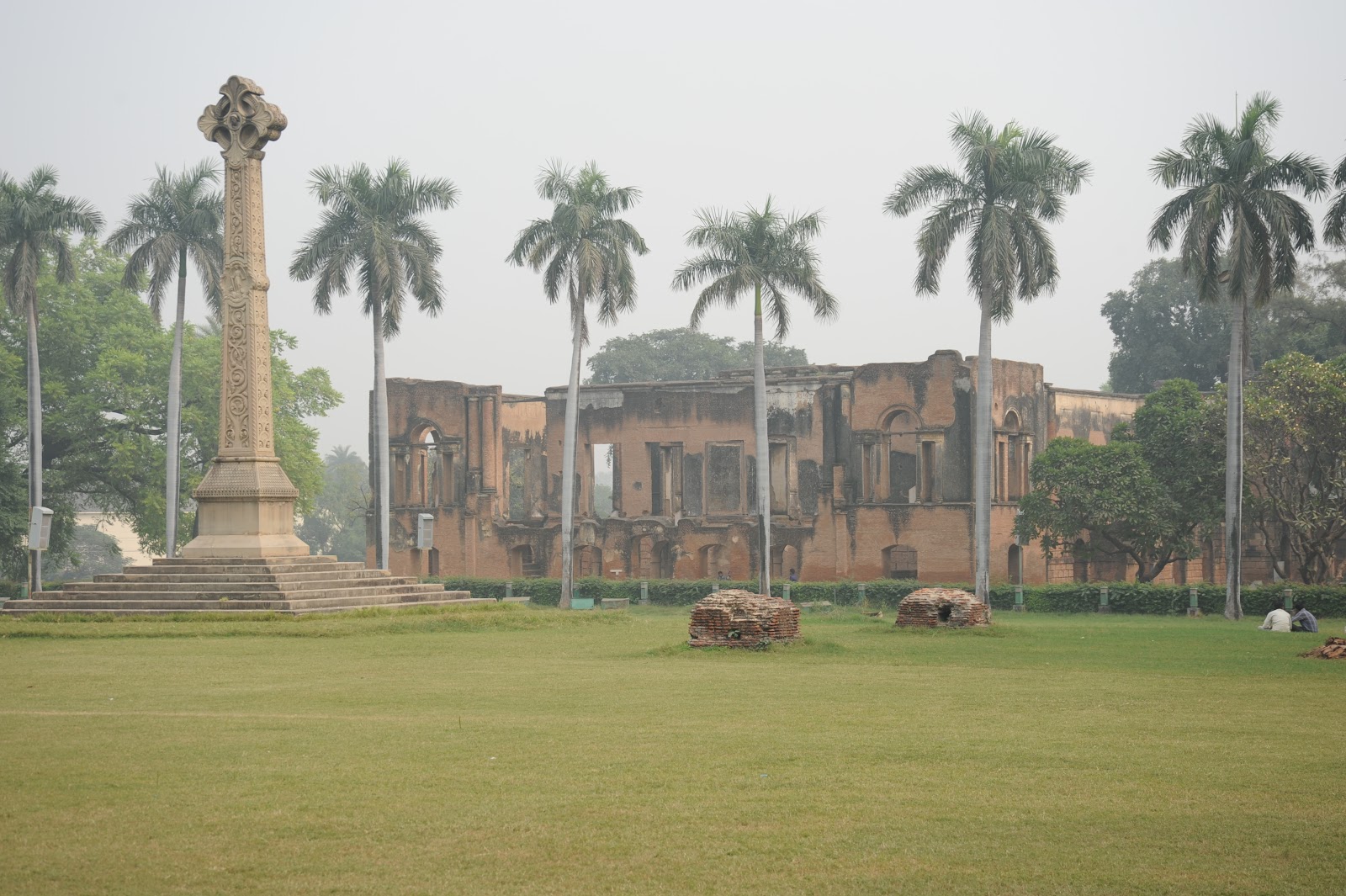
The Residency is a collection of buildings set in 60 acres, today in ruins, built by the then Nawab of Oudh around 1800. It was built to house the resident general, who at the time was Sir Henry Lawrence, along with a garrison made up of 855 British officers and soldiers along with some 700 indians and 150 civilian volunteers. For many years there had been increasing unrest among the sepoys( indian soldiers in the employ of the East India trading company) that their customs and traditions were gradually being diluted, especially in terms of religion and the hindu caste system. The straw that broke the camel's back was a rifle. To be more precise, the Enfield Pattern 1853 rifle musket, with a rifled( 1:78 rifling twist)barrel, a muzzle velocity of 900ft/s(270m/s) and a maximum, effective range of 400yds(360m). All well there, you might have thought. The munition came in the form of cartridges which contained 68 grains (4.4gms) of powder together with a 530 grain(34gms) musket ball. The problem arose in that the cartridges, for conservation purposes, were coated in animal fat. Probably pig or cow fat, the pig reviled by both hindu and muslims and the cow sacred to the hindus. British military drills of the day required soldiers to bite the cartridge open to pour the powder down the barrel and then ram the cartridge which contained the musket ball. On the 1st may, 1857, the 7th Oudh irregular infantry refused to bite the cartridge in the city of Meerut. By the 10th, the mutineers had marched on Delhi and the rebellion spread to other garrisons including Cawnpore( today Kanpur), Gwalior, Jhansi and Lucknow. Sir Henry Lawrence, fearing the worst, began to fortify the Residency, which apart from the garrison also housed around 1500 civilians, families of the soldiers including wives and children. The Residency was not an ideal location to defend. It was laid out on flat land and lacked any sort of fortification worthy of the name. The garrison was consisted of about 1600 troops made up of around half British troops and of loyal sepoys, with 150 civilian volunteers. The Lucknow siege started on the 30th may and finally came to an end on the 27th november after two attempts. By the time the body count was over, the numbers rose to 2500 dead or missing, including civilians.
As I wandered arond the Residency grounds, it was easy to time travel back and imagine the chaos and seeing the pockmarked walls from cannons and musket shot you could almost smell the burnt powder and hear the shouts and screams. I make no apology for perhaps too many nikons of the gravestones of the many soldiers and civilians who fell in it's defence. The ages of young lieutenants and the families who died through either direct injuries or of diseases various, on the gravestones, make eloquent epitaphs. I visited the Residency museum ( no cameras allowed) and stood gazing at portraits of lucknow nabobs and handwritten pleas from Sir Henry, begging for reinforcements, in vain. It was to take weeks for the Punjab light infantry to reach them. I walked down a spiral staircase about 6m below ground level to the squalid basement where the women and children sheltered during the moments of intense fighting. When help finally did arrive, the revenge was inplacable. No quarter was given to the rebels and the cry " remember cawnpore" (sight of another infamous massacre of soldiers and civilians in the city of that name) was to go down in history as british troops indulged in a frenzied, bloody revenge. By the time the mutiny was quelled, any remaing insurgents where tied to cannons and blasted. I walked back slowly, the 4km to the Golden Orchid slowly to kill time before catching the 23,45 night train to Gorakhpur, a three hour bus ride to Sunauli on the nepalese border.

Foranyone wanting to know more about the indian mutiny I would advise to read "Raj, the making of british india", by Lawrence James. On a lighter, easier to read(and funny) and extremley accurate is "Flashman and the Great game", by George Macdonald Fraser.


Cannon and musket shot / Disparo de cañón y mosquetón

 Residency buildings and grounds / Edificios y alrededores  de la residency


Main entrance to the residency / Entrada principal de la residency


Lucknow temple / Templo en Lucknow


Lucknow station on the way to Gorakhpur / Estación de Lucknow camino a Gorakhpur 


Lucknow shopp ing mall / Centrocomercial de Lucknow
Unos datos básicos sobre Lucknow. Es la ciudad principal del estado de Uttar Pradesh, al este de Delhi, con una población de 4,800,000 y a unos 130 mts. sobre el nivel del mar. Los inviernos son fríos y secos de diciembre a febrero y veranos con temperaturas altas de abril a junio. La época lluviosa siendo de mediados de junio a mediados de septiembre con una precipitación de unos 900 mm. Conocida por sus encajes elaborados, su excelente cocina mogul y por ser el lugar de nacimiento de Cliff Richards( un cantante bochornoso ingles- o indio?). Pero , también fué uno de los estallidos de un motín, que nos pudo haber costado la joya de la corona británica, ántes que por fin la regalamos en 1948.
La Residency es un grupo de edificios en 240 m2, que hoy queda en ruinas, construida por el entonces Nawab de Oudh por 1800. Se construyó para alojar al residente general, que en el momento era un tal Sir Henry Lawrence, tambien una guarnición de 855 soldados británicos y unos 700 indios con 150 voluntarios civiles. Desde hacía años, había una inquietud que iba en aumento entre los cipayos (soldados indios al servicio de la compañía de las indias orientales) que sus costumbres y tradiciones estaban siendo diluidas por los británicos, sobre todo en lo referente a la religión y la tradición hindú, de las castas. La gota que colmó el vaso, fué un fusil, para ser más exacto, el Enfield Pattern 1853, rifle mosqueta, con un cañón con rifle (1:78 rosca de rifle), una velocidad de 270 m/s y un alcance efectivo de 360 m. Hasta ahí, todo bien, pensarán, la munición venía en forma de cartucho, que contenía,  4,4 gms de pólvora, junto con una bola de 34 gms. El problema surgió, porque los cartuchos, para protegerles de la humedad, estaban cubiertos en grasa de animal, probablemente de cerdo o de vaca. El cerdo odiado tanto por hindues como  musulmanes y la vaca sagrada de los hindues. Fichas técnicas del ejercito de la época, requerían que los soldados rompiesen el cartucho con los dientes y vertiesen la polvora por la boca del cañón. A continuación, se metía el cartucho con la bola y se presionaría. El dia 1 de mayo, la 7 ma infanteria irregular de Oudh, se negó a morder el cartucho en la ciudad de Meerut. Para el dia 10 los amotinados marcharon al ataque de Delhi y la rebelión se extendió a otras guarniciones, incluyendo Cawnpore ( hoy Kanpur), Gwalior, Jhansi y Lucknow. Sir Henry, temiendo lo peor, se puso a fortificar la Residency, que aparte de los militares, también era hogar de 1500 civiles, mujeres e hijos de los soldados. La Residency no era el local mas idóneo para defender. No fué pensado para ese proposito, se encontraba ubicado sobre terreno llano y carecía de cualquier tipo de fortificación, digno del nombre. La defensa consistía en unos 1600 efectivos, la mitad británicos y la otra mitad cipayos leales, junto con 150 voluntarios civiles. Al pasear por el recinto, era fácil volver en el tiempo e imaginar el caos. Mirando a las paredes salpicadas con agujeros de mosqueta y cañón, se podía oler pólvora quemada y oir los gritos y llantos. No pido disculpas por poner, a lo mejor, demasiadas nikons de lápidas, de los que cayeron en su defensa. Las edades de los jovenes oficiales y sus familias que murieron o por enfrentamiento directo o por las varias enfermedades, sobre las tombas hacen un epitafio bastante elocuente. Cuando se acabó la cuenta de bajas, el número asciendió hasta 2500, incluyendo civiles. Visité el museo (cámaras no permitidas) y miré los retratos de los antiguos nabobs de Lucknow, pero más interesante, eran las cartas por el puño de Sir Henry, solicitando refuerzos desesperadamente. Serían semanas, antes de que llegara la infanteria ligera del Punjab, acuarteladas en Allahbad, demasiado tarde. Baje una escalera caracol a unos 6m bajo la superficie, a un escuálido sótano, donde las mujeres y niños se refugiaban durante los momentos más cruentos del conflicto. Cuando por fin llegó la ayuda, la venganza fué implacable. Ningún cuartel fue ofrecido a los rebeldes, que sobrevivieron y el grito " recordad cawnpore" (escena de otra infame masacre del motín en la ciudad del mismo nombre) se inscribió en la historia británica de la india, mientras que las tropas se ensañaron en un desquite sangriento y enloquecido. Cuando por fin el motín se habia sofocado, el 20 de junio, los insurgentes que quedaban, se les fué atados a las bocas de los cañones y disparados. Anduve lentamente lo cuatro kilometros a la orchidia dorada a matar algo de tiempo antes de montarme en el tren nocturno a las 23,45 a Gorakhpur y de ahí un viaje de tres horas a Sunauli, la frontera con Nepal.

A los que les interese, saber más del motin de los cipayos, recomiendo "Raj, the making of british india", por Lawrence James (inglés) o más facil y divertido de comprender es "Flashman y el gran juego", por George Macdonald Fraser. En castellano de edhasa.com o de libreria Balmes, calle El Progreso, 6, 27001 Lugo. Los dueños (Vicente, Maca y Jose, han dicho que cualquier que compre un ejemplar, se les invitará a una copita de amontillado y unas lonchitas de jamón pata negra.

Monday, 4 March 2013

Delhi to Lucknow, 05/11/2012

The taxi picked me up from the hotel around five in the morning while Delhi was still swathed in mist. I wanted to be on time to catch the 06,15 Shatabdi express to Lucknow. The Shatabdi is supposed to be an upmarket, relatvely fast train stopping at few stations, that should get you to Lucknow in about six hours. From the moment the train pulls out, you are plied with cups of tea and a mediochre hindu breakfast. Whilst the train chugs out of the capital and you are munching on a vegetarian snack, you are treated to the sight of scores of indians, squatting along the length of the railway line, taking their matutine shit. Try to imagine the picture, you, dipping your indian rail chapati into an unpleasantly brown and viscous dahl, observing the locals treat you to their evacuations whilst waving and giving you the thumbs up as you pass by. The oddest thing was that when the train slowed to practically walking pace, or in some parts would actually stop; these people would hold there hands out in a begging gesture without even getting up. I wondered if they actually expected passengers to hop off the train to leave them a small deposit, whilst they left their own. The train picked up speed and the rows of turding indians made way to ploughing buffalos for mile after mile. After about half an hour of this, I was able to doze off until Lucknow. Around 3pm we arrived at the impressive, gothic style 'Lucknow junction'. I took my time strolling the platform towards the exit, mentally preparing myself for what was expecting me outside the station. What awaits outside is a demented hoard of screaming taxi drivers in front of their ambassadors and rickshaws, trying to grab you and/or your belongings and drag you to their vehicle and from then, on to a hotel where they will receive a comission. Right at the back of this horde of male banshees was a driver making no effort to tout for trade, picking away at his fingernails. That's the chap for me I decided. I turned the metre long rucksack, which was full of my tea, lengthways using it in the form of a roman shield. The Lowepro safely strapped to my back, I bulldozed my way through the noisy crowd of drivers who started to berate me as I cut a swathe through them using the'maddog bergen manouvre', which they we're obviously not aware of its existence.I asked him if he was taking a rest or if he could take me to 'the golden orchid'. I was greeted at the steps of the hotel by a charming young lady in a sari who informed me that she had a reservation in my name. " I know", I replied. " I rang you last night to make it ". A very peculiar encounter I thought. I told the driver on the way to the hotel that I would be requiring his services for half a day, but that most of it would be waiting. We agreed on a price and while he waited in the hotel car park I dashed upstairs to my room to give some sort of shape to my rolled up cardboard boxes and load them with the delhi goods. It was four o clock.This meant I had an hour and a half to change some cash, get my boxes wrapped and sewed by a tailor and get to the GPO, before it closed at half past five. With the aid of a razor blade and a roll of wide tape, I had both boxes shaped, packed and sealed in twenty minutes. I threw them into the back of the ambassador and told the driver to take me to the nearest official money changer to the post office. Imagine my delight after being stuck in traffic for nearly half an hour to find that not only was there a western union next to the main building, but that outside was a handful of professional 'sewers and sealers' that for 300 rupees(each box) would have the both of them clothwrapped and wax sealed in twenty minutes. I had managed to change two hundred euros and was patiently waiting their final stitches before grabbing both boxes and heading for the tourist parcel counter. I got to the taxi, whose driver was deep in conversation with a security guard and sat next to the driver's seat with the lowepro on my knees, sweating and exhausted at 18,15. I told him that once he dropped me at the hotel, he was done for the day. After a chicken dopiaza and a few bottles of Kingfisher I passed out in my luxurious golden orchid bed two hours later.


Rickshaw driver / Conductor Rickshaw


Lucknow´s imposing GPO office / Oficina imponente de Lucknow


Lucknow street vendor / Vendedor de Lucknow


My hotel in Lucknow / Mi hotel en Lucknow


Chicken dopiaza with paratha / Una dopiaza de pollo con paratha

Onion bhajis with chatni / Bhajis de cebolla con chatni