Tomé mi té matutino en el tejado del Kailash, mirando al pico de 'cola de pez' y pensando en las tareas a que me enfrentaba. Lancé la bolsa de la cámara al hombro y emprendí el camino al mesón de Vrim a desayunar. Aparte de desayunar y hecharle un ojo al periódico, tenía otra razón para querer ver a Vrim. Cuando llegó su mujer con mi plato, la pregunté por él; con señales, enseñándome siete dedos y apuntando a mi reloj, me dió a entender que su marido había salido de Pokhara por unos asuntos y que no estaría de vuelta hasta las siete de la tarde. Decidí que después de haber invertido el dia comprando mercancía, pasaría a cenar por el chiringuito y asi mataría dos pajaros de un tiro. Tenía una corazonada, que mi amigo Vrim podría, tal vez, ayudarme en la busqueda de cierto producto. Era miércoles y antes de salir le pedí a Ram que me sacase un billete para el viaje a Kathmandu, el viernes por la mañana temprano. Eso me dejaba el dia de hoy para comprar y mañana lo pasaría embalando la mercancía para su posterior viaje y envío desde la india, la semana siguiente. Como no iba con grandes prisas, tomé el paseo a la parada de taxis con tranquilidad, parando a tomar un zumo de mango, antes de emprender el viaje al mercado tibetano, en el poblado de Devis Falls, a unos 3km del centro de la ciudad. El viaje a Devis Falls en táxi, salió en 1 euro y me dejó en el centro de un poblado, que tenía su mercado ubicado a cada lado de una carretera polvorienta. Antes de lanzarme a lo que prometía ser unas horas, tediosas y largas, de regateo duro, decidí animarme con una botella de cerveza y una tapita de samosas con dahl. Alimentado y fortalecido me puse a la tarea. Dí una vuelta por el laberinto de puestos, haciendo un reconocimiento previo y oidos sordos a los dueños, que intentaban hacerme parar. Se lo que queria y en que órden; primero me dirigí a un puesto que tenía expuestos unos khukris y un buen surtido de joyeria de piedras semi preciosas. Después de tomar los inevitables chais, conversación irrelevante y una seria sesión de regateo, salí de ahi con 10 khukris y un surtido de collares con pendientes a juego de rubí, jade y ojo de tigre. La próxima parada fue igual que la última, aunque a estas alturas mi habilidad de regateo se vio gravemente debilitada, gracias a una vejiga a punto de reventar a causa de los innumerables chais. Al final salí bastante contento con un montón de carteras de mujer, hechas de seda y unos tubos de bronce fino, encrastado con piedras para guardar palillos de incienso por un precio razonable, sin mucho regateo. En cuanto vi ambas cosas, mi sexto sentido me dijo que serían populares, como los khukris. No estaba equivocado, sabía que me iban a aportar una buena ganancia de vuelta en España. Mi próxima y última parada, eran las lanas. Me acerqué al dueño del puesto, que estaba frotandose las manos (en serio) y le expliqué más o menos lo que quería y lo que estaba dispuesto a pagar. Me hizo un gesto con la cabeza para que le siguiese. Me llevo a una enorme habitación trasera, apilada casi hasta el techo con sacos de cañamo repletos de varias prendas calcetadas con lana de yak. Pase una hora moviéndome entre montoncitos suaves de calcetines y zapatillas, gorras, guantes de todos los colores y chales, hechos de la suave lana de pecho de yak. Después de una masiva compra,salí contento ya que me habia quedado dentro de mi presupuesto; tan dentro, que pude comprar unas mochilas playeras de cañamo preciosas. Tambien a mi vuelta, resultarían ser muy populares. Eran las cuatro de la tarde y aún quedaban unas dos horas de luz, así que me senté a tomar un zumo y un pedazo de barfi pegajoso antes de emprender el viaje de vuelta al hotel. Pasé unas dos horas con mi colega Pawan, envolviendo los artículos recién comprados con periódico. A continuación me dí una ducha templada que me supo a gloria y me encaminé a Vrim's, cenar e intentar charlar un rato con él. Al llegar, ya estaba esperándome la silla de mi mesa favorita. Me saludó efusivamente, como siempre y antes de nada me fué a por una cerveza. Cuando volvió con la botella de Gorkha le invité a sentarse a charlar. Me acerque a su cara y le pregunté en voz baja si me podía conseguir una pequeña cantidad de yarchagumba. Le dije que sabía que era una modalidad escasa y cara, pero que sólo precisaba una o dos piezas. Acarició su barbilla de modo pensativo, frunció el ceño un par de veces, como si se le hubiese puesto enfrente un reto herculiano y por fin asintió lentamente. Entre tanto había llegado su mujer con mis momos de bufalo y Vrim se disculpó, diciéndome que iba a hablar con un amigo y estaría de vuelta en veinte minutos. Fiel a su palabra, estaba revolviendo mi café cuando volvió Vrim. Me dijo que había hablado con un anciano que entendía de éstas cosas, explicó que se marchaba a su aldea mañana y que estaría de vuelta el lunes. Yo le dije a Vrim que mañana yo me marchaba a Kathmandú y no volvería hasta el martes, así que no había tanta urgencia, sobre todo porque no volvía a la india hasta la próxima semana. Entonces me dijo, que a mi regreso a Kathmandú tendría algo de yarchagumba esperándome y que el precio sería unas 250 rupias cada pieza. Le dí las gracias y volví al hotel, donde le pedí a Pawan si me podría traer el té a las 05,30, ya que el bus a la capital salía a las 06,00. Después de haber echado un ojo a las noticias de la BBC, me quede dormido sobre las 22,30. Estaría en pie a las cinco de la mañana y me esperaba un viaje largo y lento el día siguiente. A todo esto, si quereis saber lo que es la yarchgumba, tendreis que esperar a mi regreso de Kathmandu.
Sunday, 9 June 2013

Monday, 3 June 2013
Shopping in Pokhara, 09/11/2012
I had taken my morning tea on the roof top of the Kailash and had decided my days' activities whilst gazing at the Fishtail peak; brightly illuminated on its eastern side, by the clear morning sun. In my room I had got together my camera bag, cash with calculator and headed off to have breakfast at Vrim's. Apart from my usual breakfast and browse at the newspaper, I had another reason for wanting to talk to him. When his wife had bought me my plate, I inquired as to his whereabouts and if I could speak to him. Although her english consisted mainly of wordless smiles and nods, I managed to ascertain that Vrim had left to perform a task away from Pokhara and would be back for the evening. All this with sign language, pointing at my watch and holding seven of her fingers up. I decided that after investing the day in the buying of merchandise at the tibetan market, I would take my supper at Vrims and over a beer pick his brain, because I had a strong hunch that he would be able to help me in my quest for a certain item. It was wednesday and I had asked Ram, back at the hotel, if he could get me a seat on the early morning bus to Kathmandu for friday. This meant that I had today to buy and tomorrow to pack the items securely for future, onward travel; I would leave the goods in Ram's care until I returned the following week from the capital. As I was in no particular hurry, I ambled on a short way towards the bus station where I could catch a taxi towards Devis Falls, where the market is located about 3km on the fringes of the city. The trip to Devis Falls cost about a euro and appeared to be a totally seperate community from the rest of Pokhara, but here was the market I had been dying to investigate, located each side of the main road. Before plunging headlong into what was going to be a long and tedious session of haggling I decided to gather my strength and take in my surroundings. To this end I plonked myself at a roadside table and watched the comings and goings, whilst feasting on a plate of dahl and samosas, accompanied by a bottle of Gorkha beer. I braced myself and headed into the labyrinth which was the Devis Falls market and walked around the stalls doing a quick reconaissance of the various wares and showing deaf ears to the pleas of the stall owners to stop at their stalls. I knew what I wanted and in what order; first I headed for a stall which had an assortment of khukris, as well as some interesting bijouterie. After a couple of inevitable chais, general cordial chit chat and some serious haggling; I came away with ten khukris and an assortment of matching ruby, jade and eye of tiger necklaces and earrings. The next stop was much the same as the last. Going through the inevitable rigmarole and coming away with a quantity of silk lined ladies purses at a very reasonable price without too much serious haggling, along with some tibetan metal crafted incense holders, encrusted with pretty, semiprecious stones, which I was sure would apport me a tidy, little profit. I had a last stop. The woollies. I approached the vendor and told him vaguely what I was after and more or less what I expected to pay. He led me to a large room behind his shop, which was piled with hessian sacks packed full of various items of yak wool wear. I spent a whole hour diving into soft bundles of multi coloured socks, slippers, caps and shawls. I left an hour later very pleased with myself as I had stayed so much within my budget that I was able to buy some beautiful. lightweight ladies beach satchels made of hemp sporting the Om symbol; which on my return turned out to be very popular. It was four in the afternoon. I still had about two hours of daylight left and I thought, in light of the successful shopping expedition, that I deserved to stop for a couple of chais and some sticky barfi, before making my way back to the Mount Kailash and packing the goods for transport. The next couple of hours where spent wrapping the goods in newspaper with the help of my chum Pawan. At around six pm, after a deliciously, tepid shower(temperatures those days where always in the top 20 degrees C), I grabbed the Nikon and wandered down to Vrim's to dine some buffalo momos and have a word in his shell-like. Sure enough there was Vrim with his ever present, beaming grin and took my order. When he had brought me a bottle of Gorkha beer I invited him to sit at "my" table for a chat. I asked him softly if he could get hold of some yarchagumba for me. I told him that I knew that it was expensive and much sought after, but that I did not require a large amount, perhaps two or three pieces. He stroked his chin in true Holmesian fashion and frowned a few times, as though he had just been presented with a herculean challenge. My momos arrived and I waded into them with gusto, famished as I was after my days toil and Vrim told me he was going to see someone and would be back in twenty minutes. True to his word, he arrived as I was stirring my coffee, stuffed after my momos and told me that he had gone to see a friend who could help me, but not for a few days. I told Vrim that this was not a problem as I was leaving tomorrow to spend the weekend in Kathmandu and would not be returning to Pokhara until tuesday and would not be leaving for India until the following monday. In that case, he said with a nonchalant flourish of his hand, that there would be some yarchagumba for me on my return from Kathmandu. How much it would be was around the 250 rupee mark, but that he was not sure how much his friend would be able to obtain. I thanked him profusely and said I would visit him upon my return from the country' capital. I srolled back to the hotel and asked Pawan if he could bring me my bed tea at 05,30 as my bus to Kathmandu was to leave at 06,00. I had a quick look at the world service and was asleep by ten, thirty. By the way, if you want to know all about yarchagumba, you'll have to wait until I get back from Kathmandu. 3 views of Devis Falls / Tres vistas de Devils Falls
 |
 |
 |
 |
| First buying point / Primer punto de compra |
 |
| Nepalese Kukhri knives / Cuchillos Kukhris de Nepal |
 |
| Woman making matching earrings for the necklaces for me / Mujer fabricando pendientes y collares a juego para mi |
 |
| Necklaces-earrings of ruby, jade and eye of tiger / Collares y pendientes de rubí, jade y ojo de tigre |
 | ||||||||||||||
| The work shop / El taller |
| Shopping by night / De compras por la noche | ||||||
 |
| Silks and cloths / Sedas y telas |
 |
| Hemp made items / Objetos hechos de cáñamo |
 | |
| Friend Om having supper at Kailash / Amigo Om cenado en Kailash |
Sunday, 12 May 2013
Pokhara,8/11/2012, the first day in town
I thought that after that wretched journey totalling 18 hours, with little rest and not having gone to sleep until 23,00, that I would have lain, closed to the world until at least lunchtime. However, it was not to be; for around 07,00 the alpine sun was hitting me square in the eyes and I could hear the bustle of a household, that judging by the sound of the activity going on, seemed to have started the day much earlier. While I was cracking a symphony with my articulations and staring at my sorry looking excuse for a face, I percieved ever such a faint knock on the door. It might have been louder, remember I still had a couple of wads of toilet paper stuffed into my ears and therefore chose to ignore it. I was pulling my eyelids down and staring at my dull looking tongue, which had began to take on the appearance of a victorian pot scourer, when the same knock was heard again. This time rather more insistent, both in volume and urgency. On opening it, I found before me, holding a tray with a pot of tea, cup and saucer and bowl of sugar, a lad of about 11 or 12 years old. He announced that he was called Pawan and that he was bringing me my "bed tea", which I had forgotten I had ordered the night before. I thanked him and asked if Bale was downstairs and if so was he busy. Pawan told me that he had gone to the bus station and would be back in a couple of hours.He went on to tell me that Bale had not forgotten that he was going to take me to see a local doctor, to finally put an end to this partial deafness, which I had accquired on the road to Pokhara the previous day. I told him that I would be taking a matutine stroll after taking my bed tea and tending to my ablutions, around the neighbourhood and would be back for 11 o clock. To this end, I found myself ambling down a dusty, curved track about 100m to the main road, which bordered the huge Phewas lake. About 50m to the left, the pavement opened up into a form of circle, around which were located various small businesses including a basic eatery. It had a narrow frontage, with steps leading to a small room containing about four small tables. However, what intrigued me more were two small tables for two, placed around a huge tree, with a circumference of around two metres and which seemed to be made up of intertwined branches. I discovered later that this arbour was locally known as the " people's tree " and is revered in nepali culture. In fact it is so revered, that felling or harming this magnificent tree in any way is considered to be a serious and severely punished crime. The sun was shining and warming and I elected to sit at one of these two tables. Indeed, throughout my stay in Pokhara, this was my normal locale for breakfast and occasionally supper and started to get disgruntled whenever I arrived and found that "my" place was taken. Breakfast consisted of a plain lhassi ( basically a liquid natural yogurt, which you can sweeten with honey if you so wish ), a neplese fry up; which was composed of sliced potatoes, sweet peppers and onions fried in either yak or buffalo fat, accompanied by fried eggs and a couple of slices of toast. All this with a pot of an excellent coffee for about 200 rupees(1,80 euros). Feeling revived, my previous days hardships seemed to have disappeared and I made my way back to the Mt Kailash hotel to meet Bale and keep my appointment with the doctor, who would hopefully rid me of my newly accquired toilet paper, ear squatters. We bounced onto his small motorbike and in less than a minute had a arrived at a quaint, white painted building with a small, but neatly kept lawn in front. I was the only patient and was quickley ushered into a clean, but somewhat outdated surgery, resembling something that one might have seen in a european hospital in the 1960's. The doctor turned out to be indian, with an excellent english, which reminded me of my friend Mr. Mittal in delhi. After having explained my dilemna, he promptly donned a pair of latex gloves and set to with the eviction. It was rather an anticlimax, as in a couple of minutes he was proudly showing me two repulsive, nicotine coloured wads gripped between his forceps. Suddenly, as if by magic, a whole new world was audially opened up to me, all for 4,600 rupees (about 40 euros). Having paid and thanked him profusely; he even gave me a receipt, duly signed and stamped, should I wish to claim medical costs from the insurance company, I headed off to explore the city. I first directed myself to the airport. A short, half hour walk; taking in various wrong turns and wandering through parts of the town, I could otherwise avoided by taking a cab for 2 euros. The whole point is TO get lost and amble slowly, catching otherwise missed photographic opportunities, which would have been thrown away by having been whizzed to my destination in 5 minutes. The point, was also to stop for a freshly squeezed juice or lhassi and watch the Pokhara life go past, while I basked in a gentle 26 degree sun; it was also to have to ask for directions from the locals and seeing how forthcoming they were in their helpfulness. I was pleased to see just how forthcoming and smiling they all were. The reason I wanted to see the airport is that you can normally get a feel of a place by seeing it's airport. The fact that it was within walking distance was a good start and the fact that it was the size of what Croyden airport must have been in the 1920s also pleased me. I waited patiently to see or hear a plane; I waited and waited a little bit more, deafened by the complete silence of the place. I looked around, trying to at least see a plane on the ground, which from the perimeter fence was somewhat difficult. The airport seemed to have been frozen, maybe it was closed down for some reason. I shrugged and saw a young, student looking adolescent walk in my direction. I politely hailed him and asked him if he knew anything about the lack of planes in the airport. " Oh," he waved his hand in a vague gesture. " This small airport, maybe 3 or 4 planes come and go. From Kathmandu, Manang, Jomsom maybe," he added. The rest of the afternoon was spent finding out how to get to the nepalese, artesanal market at Dewas Falls, where I was to make my nepalese purchases the following day. It was dark around half past seven and the temperature drop was extreme. The second of nepal's daily powercuts was underway. The Mt. Kailash patio was gently illuminated by auxilary bulbs and I decided that it was an ideal moment to have an early supper of chicken chowmein and a couple of bottles of Tuborg gold. I was soon drawn into conversation by a couple of local tourists. One was a couple from the Gujarat region,who had arrived with their two sons for a few days, so they could see snow; the other guests were a friendlier couple with a baby girl, who hailed from some far flung, nepalese village and had come to Pokhara to buy some household essentials, whatever they could be. Around 21,00, both families had retired and I was left alone until Ram turned up with a couple of bottles of tuborg and sat next to me. Two hours, two more bottles and two more spliffs and interesting company had passed, when the power returned, putting an end to these past enjoyable couple of hours. This meant that we could go to our respective quarters and in my case, get in a bit of the world service and ponder on the next day's visit to the nepalese market.
 |
| Breakfast and Vrim's / Desayuno en Vrim |
 |
| Vrim |
 |
| The People's Tree in front of Vrim´s diner / El Árbol de la Gente enfrente del comedor de Vrim |
 |
| Another People's Tree the other side of road from Vrim's / Otro Árbol de la Gente en el otro lado de Vrim's |
 |
| Fruit squeezing stall / Puesto de zumos |
 |
| Petrol driven fruit squeezer / Exprimidor de fruta con motor a gasolina |
 |
| The People´s Tree in front of Vrim´s / El Árbol de la Gente frente a Vrim's |
Pensaba que después de ese maldito viaje de 18 horas, con poco descanso y de no haberme dormido hasta las 23,00, que estaría muerto al mundo hasta, por lo menos el mediodia. Pero, no iba a ser; porque ahí sobre las 07,00 el sol alpino, me estaba pegando justo en la cara y se podía oir el bullicio de una casa, que a juzgar por la actvidad que se escuchaba, había empezado el día bastante antes. Mientras que estaba tocando una sinfonía con mis articulaciones y mirando a mi triste excusa de cara, percibí una suave llamada a la puerta. Podía haber sido mas alta, ten en cuenta que aún tenía dos trozos de papel higiénico embutidos en mis oidos y elegí ignorarla. Estaba tirando de mis párpados y reflexionando sobre mi lengua, que a estas alturas estaba tomando el aspecto de un estropajo, cuando sonó la misma llamada otra vez, pero ahora con más volumen e insistencia. Al abrir la puerta, me encontré con un joven, de unos 12 o 13 años, sujetando una bandeja con un pocito de té y una tacita. Anunció que se llamaba Pawan y que me traía el té de la mañana, que me olvidé había pedido la noche anterior. Le dí las gracias y pregunté si Bale estaba disponible. Respondió que había ido a la estación de autobuses, pero que estaría de vuelta en un par de horas y que no se había olvidado de mi visita al médico local para poner fin a esta sordera parcial, que habia adquirido en el viaje a Pokhara el día anterior. Le dije entonces, que después de mis abluciones, iría a dar un paseo matutino y que estaría de vuelta a tiempo para la dicha cita. Con este fin, en media hora, me encontré bajando un sendero sin asfaltar a unos 100m, a la carretera principal que daba al enorme Lago Phewas. A unos 50m a la izquierda, la acera se convertía en una terracita en forma de semi circulo, bordeada por pequeños negocios, incluyendo un comedor básico. Tenía la fachada estrecha, con unas cuatro escaleras que subian a un diminuto comedor de 4 o 5 mesas. Pero lo que más me intrigaba, eran dos mesas en la terraza al lado de un enorme arbol, que debía de tener una circunferencia de dos metros y parecia ser conpuesto por lianas entrelazadas. Descubrí más tarde que es conocido como el "árbol de la Gente" y es muy respetado en Nepal. Es tan sagrado que la tala esta prohibida y qualquier intento de dañarlo de qualquier manera está severamente castigada. El sol ya calentaba suavemente y decidí desayunar afuera, mientras que observaba el día a día de Pokhara. De hecho, mientras que me quedaba en Pokhara, el local se convirtio en el sitio donde desayunaba todos los dias y a veces cenaba ahi tambien.Llegó al punto, donde me enojaba ligeramente, si al llegar, encontraba alguien sentado en "mi" mesa. El desayuno consistía en un lhassi(un yogur, natural, líquido que se pueda endulzar con miel, si se desea); a continuación se me sirvió dos huevos fritos, patatas, pimientos y cebollas fritas, con dos tostadas y una jarrita de café exquisito. Todo por unas 200 rupias(1,80euros). Sentándome reconstituido y los horrores del día anterior olvidados, volví sobre mis pasos al Kailash para mantener mi cita con el médico que iba a librarme de mis recién llegados inquilinos. Me monté de paquete, sobre la peqeña moto de Bale y en menos de un minuto, habíamos aparcado en frente de un pequeño edificio blanco con un cachito de césped, bien cuidado. Como era el único paciente, se me pasó rapidamente a un quirófano, que aunque pulcro, se veíia un equipo, que me recordaba la de un hospital inglés de los años 60. Daba la casualidad que el médico era indio, con un inglés preciso y suave, que me recordaba a mi amigo, el Sr. Mittal en Delhi. Después de haberle contado mi dilema, se enfundó las manos con unos guantes de látex y procedió con el deshaucio. La operación al final, fué una pequeña desilusión; ya que en apenas un par de minutos, estababa orgullosamente, mostrándome un par de bultitos asquerosos, color nicotina presas entre sus pinzas quirúrgicas. De repente, como si de magia se tratase, un mundo audiablemente nuevo, se me presento. Todo por 4600 rupias, unos 40 euros. Me pasó una factura firmada y sellada, por si quería reclamar los costes de la compañía de seguro y me dispuse a explorar Pokhara. Primero quería dirigirme al aeropuerto. Un corto paseo de media hora, que conllevaba tomar calles equivocadas y meterme en barrios donde no hubiese pisado si hubiese tomado un taxi por dos euros y llegado a mi destino en cinco minutos. La cosa es que se trata de perderse, de caminar lentamente, captando esas fotos únicas, que no hubiesen sido posible, desde el interior de un taxi repartiendome a toda leche, para poder saborear el ambiente. La razón por dirijirme al aeropuerto, es porque el aeropuerto de una ciudad puede ayudar a darte una idea de lo que se podia esperar de ella.Me tome el tiempo, parando aqui y alla, tomandome un lhassi o zumo de mango o platano y teniendo que pedir direcciones a los locales y asi averiguar su atitud y soltura hacia los extranjeros y hasta que grado estan dispuestos a ayudarte. Despues de muchas sugeriencias de la mejor manera de llegar, opté por la que se me repetía con más frecuencia y en pocos minutos me encontré en la acera al lado de la valla del perímetro. La proximidad ya era un punto en su favor, se podía llegar andando tranquilamente en media hora, desde el hotel, eso me gustó. Tambien me gustó su tamaño, tenía el mismo aspecto que el primer aeropuerto de Londres, ubicado en Croydon, sobre el 1920. Esperé pacientemente, intentando ver aterizar un avión. El lugar estaba muy tranquilo. Hacía mi, se acercaba un adolescente, con pintas de estudiante y le paré. Con cortesía pregunté a este mocetón si me podía explicar algo acerca de la obvia falta de aeronaves. "Oh," dijo, con un vago gesto de la mano, éste es un aeropuerto pequeño con 3 o 4 aviones cada dia, de Kathmandu, Manang y tal vez Jomsom, añadió. El resto de la tarde, lo pasé averiguando como llegar al mercadillo artesanal, nepalí, cerca de la cascada de Dewas Falls, donde pensaba conseguir mi mercancia nepalesa al día siguiente. Sobre las siete y media, en Pokhara ya era de noche y el descenso de temperatura era muy notable, después del calorcito veraniego que se disfrutaba durante el día. El segundo de los cortes de luz, que sufre nepal cada día ya se habia impuesto. La terraza del Mt. Kailash estaba suavemente iluminada por las bombillas auxiliares, gracias al generador y decidí que era el momento ideal para disfrutar una cena temprana, de chowmein de pollo acompañado de un par de botellas de tuborg. En poco tiempo, habia entablado conversacion con otros huéspedes del hotel. Unos eran una pareja de la región desértica india del Gujarat, que habían venido a nepal un par de días, para que sus dos hijos pudieran ver nieve, los otros huéspedes eran una pareja simpática con una niña de corta edad y eran oriundos de un distante pueblo de nepal y habían venido a la ciudad para abastecerse de artículos imposibles de conseguir en su remota aldea. Sobre las 21,00 las dos familias se habían retirado a sus aposentos, dejándome a sólas con el silencio, cuando llegó Ram con un par de botellas de cerveza. Dos botellas más, dos porros y dos horas de la grata compañía de Ram habían pasado.... cuando volvió la corriente. Esto era la señal que cada uno se retirase en su respectiva dirección, en mi caso, a meterme en la cama con mi taza de chai y ver lo que habia pasado por el mundo, a traves del World Service, mientras que le daba vueltas sobre mi plan de acción del día siguiente.
Monday, 15 April 2013
Pokhara, 7/11/2012. Arrival 21,00
Although it only cost 350 nepalese rupees, about 3,30 euros, it cost me 8 hours of my life. That's an average of 23 km an hour, mainly due to the nepalese topography and the inumerable stops to pick up passengers; with their respective cargo, which could vary from awkwardly shaped parcels to livestock. In one case during the trip, a goat was placed on the roof rack. Nepal is a landlocked, monarquical state; of a roughly rectangular shape, measuring approximatley 800 km by about 200km and divided into three main regions, stretching from west to east. The first to the south is known as the Terai plain, which is still part of the indian gangetic plain and enjoys a subtropical to tropical climate. This only lasts about 20km and is an interesting and non problematic stretch of road due to its straightness and the exotic flora and fauna it contains. It is after the Terai, that the hill region or pahad begins. This is where you start to slow down the pace, due to a twisting series of poor mountain roads that lie anywhere between 800m to 3000m and the geography changes rapidly from subtropical, temperate to alpine. You then start the descent into one long, west to east valley which takes in Pokhara and Kathmandu, sheltered from the inclement conditions that come from the tibetan plateau, with its piercing winds, by the Annapurna and Himalayan moutain ranges. This is the third region, the mountainous or parbat, which is home to seven of the eight highest mountains in the world; including the famous Everest( Sagarmatha in nepali ), Kanchenjunga(K2) and the famous Annapurna, which lies only 30km north of Pokhara. About two hours into the journey, the driver decided it was time to put on some local music to make the journey more bearable. Each one to his own, but after half an hour of this incessant wailing at volumes that would make Motorhead shudder, I decided enough was enough. I delved into my Lowepro and pulled out a strip of toilet roll, which I chewed and managed to convert into two earhole sized pellets, which I plugged into each one; hoping that this measure would ease the audial discomfort I was undergoing. For a while it seemed to dull the cacophony, but I could still hear its punishing throb, albeit less loudly. Matters got worse three hours later, when I discovered I had lost contact with both of the shit paper plugs and was unable to retrieve them. I had not only gone partially deaf, but my recalcitrant bog roll pellets were probably working their way towards my eustachian tubes and that shortly I would probably lose my balance. My arrival into Pokhara at around 21,00 was met by the usual horde of insistent taxi drivers, although much less aggressive than the indian ones. I spied a taxi driver making his way towards me, with a rather tall chap at his side. What they were going to offer, I needed, namely a relatively decent hotel in the centre of town. However, I decided to take the bull by the horns and turn the table to my side . I shouted to the driver( as by this time the toilet paper had well and truly taken hold and I could'nt hear dickshit), " I will only hire you if you can get me a tola of the finest nepalese charas !", I screamed at the poor man. The cab driver told me that this was easily solved. The tall chap who was with him, told me that he could offer me a clean room, with television, shower and room service for just 600 rupees.about 5,60 euros. In the end, I decided that it would be worthwhile taking a look at the room, even if it was just to get hold of the charas and get some sleep after the gruelling 8 hour journey. I could always move out the next day. I was pleasantly surprised when the tall chap, who turned out to be called Bale,took me to the Mount Kailash hotel and showed me the room I had been longing for. Two single beds with adjoining toilet and shower and a tv on a small coffee table, next to one of the beds. Bale, turned out to be a very amiable chap, who also happened to be the brother in law of the owner.It was a family business and in my travelling experience this was a good sign. Bale asked me if I wanted something to eat and passed me a menu. I ordered a porton of vegetable momos and a bottle of Tuborg gold. What Bale had omitted to tell me was that the water for the shower was heated by solar plaques and that the water might not be that warm. I was pleased to know that solar energy was being used and was quite prepared to have a tepid two minute shower. Apparently, the best time of the day to enjoy the hottest water was around 14,00. I had the towel around my waist ten minutes after arriving, when there was a knock on the door and I cautiously opened it to find a young nepalese lad, with a tray of ten momos and a huge (650cl) bottle of beer. I thanked him and as soon as he scuttled off, I laid into the succulent momos. I was through the fifth one when there was another knock on the door and the taxi driver nipped in to the room and offered me a rolled up piece of newspaper. I unfolded it and found to my delight a tola (between 10-12gms) of smooth, soft nepalese hashish as black as Newgate's knocker. I smelled it and squeezed it and nodded my approval. I asked him how much he was going to ask me for it, fully prepared, tired as I was to barter. "2000 rupees", (about 18 euros) he replied. There was no way I was even prepared to haggle over a single paise, I paid him for the fare and the goods. I was soon tucked in, with a first class joint, a bottle of 8% tuborg and the BBC world service. Tomorrow would be another day and I would meet the rest of this delightful family : Ram Karki the boss; his perpetually smiling wife, Nisha and their two great kids, my chum Pawan and his beautiful younger sister Ritu.
 | ||||||||||
| Eight hours of this to Pokhara / Ocho horas de esto a Pokhara |

 |
| The front of Mount Kailash Hotel / El frente del Hotel Mountain Kailash |
 | |||||||||||
| The view from my hotel in the morning / La vista desde mi hotel por la mañana |
 |
| Fish Tail mountain in the evening / Montaña Cola de Pez por la tarde |
 |
| My lovely room at the Mount Kailash. Note the tiny nepalese bananas on the bed / Mi amada habitación en el Mount Kailash. Fijaros en los enanos, platanos nepaleses sobre la cama |
 |
| My friend Pawan Karki / Mi amigo Pawan Karki |
 |
| The boss Ram, Pawan´s dad / El Jefe Ram, papa de Pawan |
 |
| Nisha, Ram´s wife and Pawan and Ritu´s mother / Nisha, mujer de Ram y madre de Pawan y Ritu |
 |
| Ritu |
 |
| Fish Tail from roof top / Cola de Pez desde el tejado |
 |
| One tola of charas started / Una tola de charas empezada |
 |
| Ram smoking in the patio / Ram fumando en el patio |
Thursday, 4 April 2013
A las 22,30 estaba con mi petate, esperando que el altavoz anunciase la inminente llegada de mi tren a Gorakhpur y que debía hacer el camino al andén 3. Llevaba ya, en el andén 3, unas tres horas y media, sin señal de dicha locomotora. Ese tiempo lo pasé, en parte, intentando averiguar como pudo haber llegado una vaca, al andén 3, ya que la altura desde los railes era demasiado alta, para que el bovino lo pudiese negociar y no veía a la vaca subiendo y bajando las escaleras. Aguantando el aliento, hice una muy breve visita al tigre de la estación, mientras seguía cabilando el tema de la vaca. Mientras tanto, mis pulmones estaban a punto de reventar y mis ojos escocían, debido a los altos niveles amoníacos de meadas pasadas. Observaba una pila de cagadas, que estaban formando un muro de contención, previniendo que los orines pasasen por el desague, y en vez de ello, se filtraban a traves de las boñigas, hacía el andén por debajo de la puerta. Mientras llenaba mis castigados pulmones con un aire menos fétido, observé, como un macaco robaba unos plátanos en un tenderete, mientras que el dueño estaba enfrascado en conversación con alguien. De repente fuí iluminado..... La vaca tuvo que haberse extravíado por las vías y los andenes tenían los extremos en forma de rampa. Las vacas por estos lares deben de tener, geneticamente engranados, el conocimiento, de que nadie en este pais tiene huevos a joder con una vaca. Fué de mi agrado que después de solucionar éste enigma, fué seguida por la llegada de mi tren a Gorakhpur. Tuve que esperar 2 horas hasta que la litera que tenía asignada, fuera vaciada por el ocupante previo, debido a una C.A.I. ( cagada administrativa india). Las CAI, son bastante comunes y cuando te apuntas a un viaje a este país, las CAI son parte del paquete y hay que ser estoico sobre el tema. Dormí en cachitos desde las 03,00 hasta las 06,15, cuando el tren entró en la lúgubre estación de Gorakhpur. No ví nada de Gorakhpur a la ida, ya que en 15 minutos había bajado del tren (no cosa fácil en la india), saltado a un rickshaw y sentado en un bús a punto de arrancar en un viaje de tres horas hasta la frontera con Nepal. El viaje me llevó a través de una llanura fértil, salpicado con paisanos agachados en sus labores. El sol ya había salido y calentaba mientras que picaba unas "samosas" que había comprado sin bajar del bús, la transacción haciéndose a través de la ventanilla. En poco tiempo había conciliado el sueño que mi cuerpo me pedía, desperadamente. Desperté media hora antes de llegar a Sunauli. Sunauli, como muchos pueblos de frontera, no tienen una razón de ser, en concreto. Sencillamente, es el último punto de un país, antes de entrar en otro y está lleno de gente, buscándose la vida como sea, debido a este hecho; pero hay algo deliciosamente excitante, el cruzar una frontera a pie y pasar por los trámites de salida y entrada. El bús estaba en un atasco a unos 200m de la frontera y el tráfico se movía lentamente, debido a los procesos aduaneros que tenían que observar los camioneros. A cada lado del tráfico, pequeños porteadores nepaleses iban y venían de cada lado de la frontera, cargados con enormes bultos, que llevaban sujetos a su frente mediante una cuerda de cáñamo. Pegué un salto del bús y caminé hacia la caseta india, donde un policia me selló el pasaporte con salida sin apenas mirarme. Agarré el petate, la Lowepro sujeta a mi espalda y anduve los 10m detrás de la barrera, hacia un caseto más grande, en el lado nepalés. Nepal!!!!!!!! Este caseto tenía unas tres mesas con seis funcionarios, que estaban amurallados detras de una pila de solicitudes de visados y pasaportes de todo el mundo. Un impreso debidamente rellenado, con 2 fotos de pasaporte y $40 es lo que costó, la pegatina del visado en 15 minutuos. Decia: Nepal Immigration, visado válido por 30 días, hasta el 07/12/2012, emitido en Belahiya. Estaba en Nepal y esos 10m que me separaban de la frontera india eran claramente palpables. Me tomé una cerveza congelada, ya que había comprado mi billete de bús a Pokhara, a unas 8-10 horas y a solo 187km de distancia.
Lucknow to Gorakhpur and Nepal, 6-7/11/2012
At 23,30 I was clutching my bag and waiting for the loudspeaker to announce the imminent arrival of my train to Gorakhpur and to make my way to platform 3. I had been on platform 3 for about three and a half hours. In that time I pondered on how a cow could have made its way to platform 3, as the distance from the rails to the platform was to high for it to negotiate and I could not see the cow walking up the steps to the adjoining corridor. I held my breath while I visited the station khasi and carried on pondering over this poser, while my eyes watered due to the high levels of amonia and piles of turds that formed a wall of contention, preventing the piss slithering down the hole and to flow out the "toilet" door onto the platform. While I filled my lungs with less fetid air, I watched a monkey steal bananas from a stall whilst the owner was in conversation with another vendor and suddenly I was iluminated ! The cow had to have wandered onto the rails and that platform 3 must have a slope. The cows round this shires must know that no one would have the balls to hit a cow! I was pleased that the solution to this puzzle was followed by the train I had been waiting for. I had to wait 2 hours for my berth to be "deoccupied" due to a typical indian administrative fuck up. Some thing very common(administrative fuckups) in india and one has to be stoic about it all, for when you sign up for a visit to india, administrative fuckups are part of the touristic package. I slept in snatches from 3am to 06,15 when the train pulled into the rather shabby Gorakhpur. I did'nt see much of it however, on this trip. More about Gorakhpur on the way out. In 15 minutes I had left the train, mounted a cycle rickshaw and was sitting right at the front of a bus about to pull out on a 3 hour journey towards Sunauli, on the indian side of the nepalese border. The journey involved passing a lot of fertile flatland dotted with bent over peasants. As the sun rose I munched on some samosas I had bought, conducting the transaction athrough the bus window and caught up on some desperatley needed sleep, till waking up half an hour before reaching Sunauli. Sunauli, like most border towns does not have a " raison d'etre". It is simply the last point before you leave a country and enter another, but there is something special about crossing a land border on foot and going through the entering and leaving formalities. The bus was stuck in an endless queue about 200m from the barrier, but the traffic moves at a snails' pace as the drivers of vehicles have to go into the government offices and go through interminable red tape and paying of taxes, before the barrier is raised and one more lorry leaves a space. On the sidewalks, files of tiny nepalese with enormous bulks hooked around their foreheads enter and leave either of the countries. I got off the bus and made my way to a small hut on the indian side, where my passport was stamped with an exit. I grabbed my bergen(the Lowepro being on my back) and walked 10m behind the manual barrier to another small hut on the nepalese side. Nepal ! In another little hut, but with desks and 6 functionaries walled in by piles of visa applications and passports from around the world. Having filled in the usual form, with attached photo( when you do such trips, make a point of taking several identical copies of passport photos, it saves not just money, but more importantly it saves time) and handed over $40, it took 15 minutes to have a sticker stuck on one of the pages : Nepal immigration, 30 day tourist visa until 0712/2012, issued in Belahiya. I was in Nepal and something in the difference of those 10m was clearly palpable. I had an ice cold beer, having bought my ticket to Pokhara, 8-10 hours, but only 187km away
 |
| Views from the bus on route of Nepal on the way to Pokhara / Vistas desde el bus de Nepal camino Pokhara |


Monday, 11 March 2013
The siege of the Lucknow Residency, 6/11/2012
The basic facts about Lucknow. It is the capital city of the Uttar Pradesh which lies to the east of Delhi, with an average population of 4,800,000 and 130m above sea level. It rests in the middle of the gangetic plain between the rivers Ganja and Yamuna; with a humid, sub tropical climate. Cool, dry winters from december to february and hot, dry summers from april to june. The rainy season being from mid june to mid september, with an average rainfall of 900mm. Well known for its elaborate brocades, excellent mogul cuisine and the birthplace of Cliff Richards.But, it also happened to be one of the flashpoints in an uprising that could have cost us the jewel of the crown, before we finally gave it away in 1948, the 1857-58 sepoy mutiny.
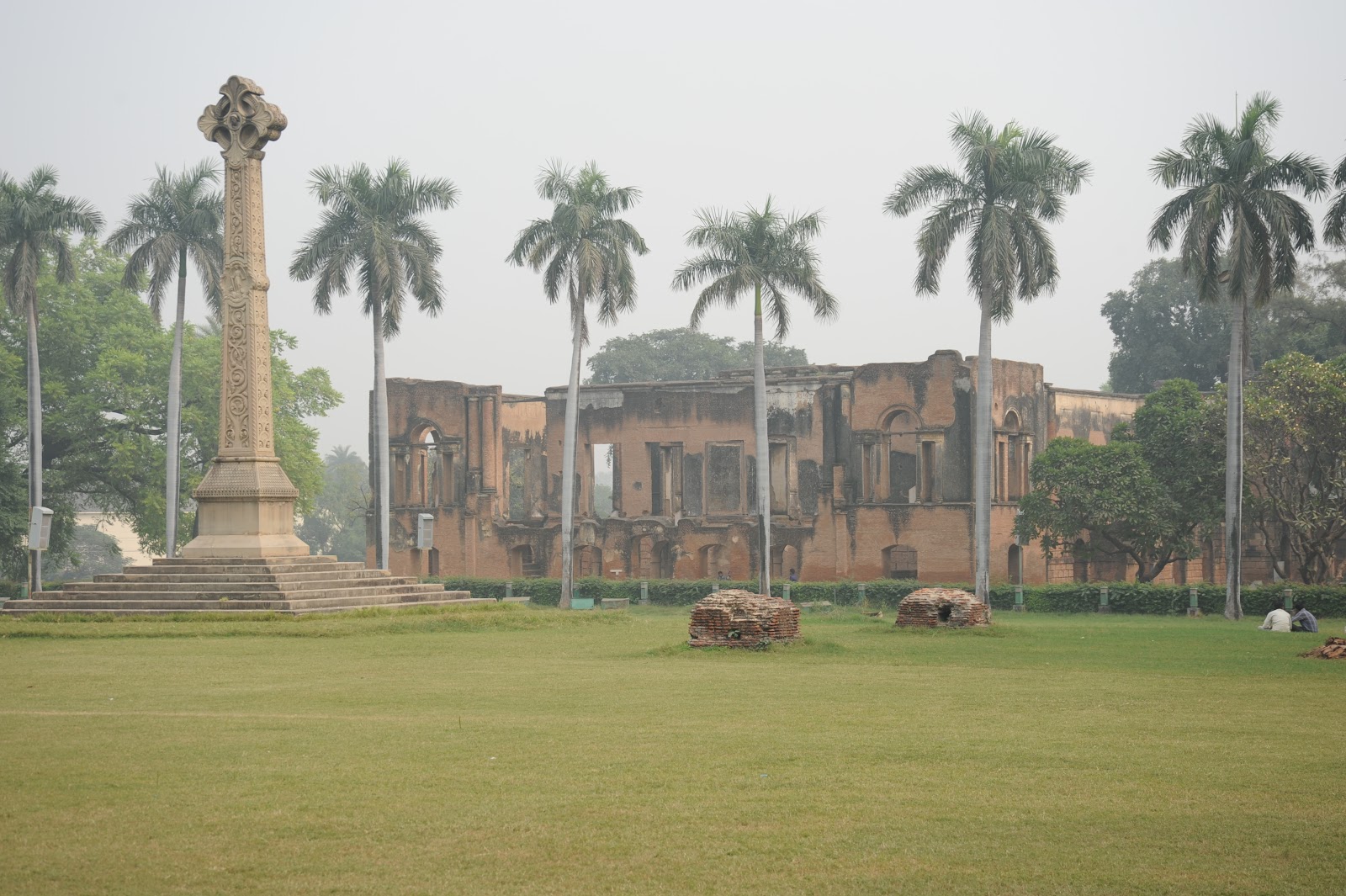
The Residency is a collection of buildings set in 60 acres, today in ruins, built by the then Nawab of Oudh around 1800. It was built to house the resident general, who at the time was Sir Henry Lawrence, along with a garrison made up of 855 British officers and soldiers along with some 700 indians and 150 civilian volunteers. For many years there had been increasing unrest among the sepoys( indian soldiers in the employ of the East India trading company) that their customs and traditions were gradually being diluted, especially in terms of religion and the hindu caste system. The straw that broke the camel's back was a rifle. To be more precise, the Enfield Pattern 1853 rifle musket, with a rifled( 1:78 rifling twist)barrel, a muzzle velocity of 900ft/s(270m/s) and a maximum, effective range of 400yds(360m). All well there, you might have thought. The munition came in the form of cartridges which contained 68 grains (4.4gms) of powder together with a 530 grain(34gms) musket ball. The problem arose in that the cartridges, for conservation purposes, were coated in animal fat. Probably pig or cow fat, the pig reviled by both hindu and muslims and the cow sacred to the hindus. British military drills of the day required soldiers to bite the cartridge open to pour the powder down the barrel and then ram the cartridge which contained the musket ball. On the 1st may, 1857, the 7th Oudh irregular infantry refused to bite the cartridge in the city of Meerut. By the 10th, the mutineers had marched on Delhi and the rebellion spread to other garrisons including Cawnpore( today Kanpur), Gwalior, Jhansi and Lucknow. Sir Henry Lawrence, fearing the worst, began to fortify the Residency, which apart from the garrison also housed around 1500 civilians, families of the soldiers including wives and children. The Residency was not an ideal location to defend. It was laid out on flat land and lacked any sort of fortification worthy of the name. The garrison was consisted of about 1600 troops made up of around half British troops and of loyal sepoys, with 150 civilian volunteers. The Lucknow siege started on the 30th may and finally came to an end on the 27th november after two attempts. By the time the body count was over, the numbers rose to 2500 dead or missing, including civilians.
As I wandered arond the Residency grounds, it was easy to time travel back and imagine the chaos and seeing the pockmarked walls from cannons and musket shot you could almost smell the burnt powder and hear the shouts and screams. I make no apology for perhaps too many nikons of the gravestones of the many soldiers and civilians who fell in it's defence. The ages of young lieutenants and the families who died through either direct injuries or of diseases various, on the gravestones, make eloquent epitaphs. I visited the Residency museum ( no cameras allowed) and stood gazing at portraits of lucknow nabobs and handwritten pleas from Sir Henry, begging for reinforcements, in vain. It was to take weeks for the Punjab light infantry to reach them. I walked down a spiral staircase about 6m below ground level to the squalid basement where the women and children sheltered during the moments of intense fighting. When help finally did arrive, the revenge was inplacable. No quarter was given to the rebels and the cry " remember cawnpore" (sight of another infamous massacre of soldiers and civilians in the city of that name) was to go down in history as british troops indulged in a frenzied, bloody revenge. By the time the mutiny was quelled, any remaing insurgents where tied to cannons and blasted. I walked back slowly, the 4km to the Golden Orchid slowly to kill time before catching the 23,45 night train to Gorakhpur, a three hour bus ride to Sunauli on the nepalese border.
Foranyone wanting to know more about the indian mutiny I would advise to read "Raj, the making of british india", by Lawrence James. On a lighter, easier to read(and funny) and extremley accurate is "Flashman and the Great game", by George Macdonald Fraser.


Unos datos básicos sobre Lucknow. Es la ciudad principal del estado de Uttar Pradesh, al este de Delhi, con una población de 4,800,000 y a unos 130 mts. sobre el nivel del mar. Los inviernos son fríos y secos de diciembre a febrero y veranos con temperaturas altas de abril a junio. La época lluviosa siendo de mediados de junio a mediados de septiembre con una precipitación de unos 900 mm. Conocida por sus encajes elaborados, su excelente cocina mogul y por ser el lugar de nacimiento de Cliff Richards( un cantante bochornoso ingles- o indio?). Pero , también fué uno de los estallidos de un motín, que nos pudo haber costado la joya de la corona británica, ántes que por fin la regalamos en 1948.
La Residency es un grupo de edificios en 240 m2, que hoy queda en ruinas, construida por el entonces Nawab de Oudh por 1800. Se construyó para alojar al residente general, que en el momento era un tal Sir Henry Lawrence, tambien una guarnición de 855 soldados británicos y unos 700 indios con 150 voluntarios civiles. Desde hacía años, había una inquietud que iba en aumento entre los cipayos (soldados indios al servicio de la compañía de las indias orientales) que sus costumbres y tradiciones estaban siendo diluidas por los británicos, sobre todo en lo referente a la religión y la tradición hindú, de las castas. La gota que colmó el vaso, fué un fusil, para ser más exacto, el Enfield Pattern 1853, rifle mosqueta, con un cañón con rifle (1:78 rosca de rifle), una velocidad de 270 m/s y un alcance efectivo de 360 m. Hasta ahí, todo bien, pensarán, la munición venía en forma de cartucho, que contenía, 4,4 gms de pólvora, junto con una bola de 34 gms. El problema surgió, porque los cartuchos, para protegerles de la humedad, estaban cubiertos en grasa de animal, probablemente de cerdo o de vaca. El cerdo odiado tanto por hindues como musulmanes y la vaca sagrada de los hindues. Fichas técnicas del ejercito de la época, requerían que los soldados rompiesen el cartucho con los dientes y vertiesen la polvora por la boca del cañón. A continuación, se metía el cartucho con la bola y se presionaría. El dia 1 de mayo, la 7 ma infanteria irregular de Oudh, se negó a morder el cartucho en la ciudad de Meerut. Para el dia 10 los amotinados marcharon al ataque de Delhi y la rebelión se extendió a otras guarniciones, incluyendo Cawnpore ( hoy Kanpur), Gwalior, Jhansi y Lucknow. Sir Henry, temiendo lo peor, se puso a fortificar la Residency, que aparte de los militares, también era hogar de 1500 civiles, mujeres e hijos de los soldados. La Residency no era el local mas idóneo para defender. No fué pensado para ese proposito, se encontraba ubicado sobre terreno llano y carecía de cualquier tipo de fortificación, digno del nombre. La defensa consistía en unos 1600 efectivos, la mitad británicos y la otra mitad cipayos leales, junto con 150 voluntarios civiles. Al pasear por el recinto, era fácil volver en el tiempo e imaginar el caos. Mirando a las paredes salpicadas con agujeros de mosqueta y cañón, se podía oler pólvora quemada y oir los gritos y llantos. No pido disculpas por poner, a lo mejor, demasiadas nikons de lápidas, de los que cayeron en su defensa. Las edades de los jovenes oficiales y sus familias que murieron o por enfrentamiento directo o por las varias enfermedades, sobre las tombas hacen un epitafio bastante elocuente. Cuando se acabó la cuenta de bajas, el número asciendió hasta 2500, incluyendo civiles. Visité el museo (cámaras no permitidas) y miré los retratos de los antiguos nabobs de Lucknow, pero más interesante, eran las cartas por el puño de Sir Henry, solicitando refuerzos desesperadamente. Serían semanas, antes de que llegara la infanteria ligera del Punjab, acuarteladas en Allahbad, demasiado tarde. Baje una escalera caracol a unos 6m bajo la superficie, a un escuálido sótano, donde las mujeres y niños se refugiaban durante los momentos más cruentos del conflicto. Cuando por fin llegó la ayuda, la venganza fué implacable. Ningún cuartel fue ofrecido a los rebeldes, que sobrevivieron y el grito " recordad cawnpore" (escena de otra infame masacre del motín en la ciudad del mismo nombre) se inscribió en la historia británica de la india, mientras que las tropas se ensañaron en un desquite sangriento y enloquecido. Cuando por fin el motín se habia sofocado, el 20 de junio, los insurgentes que quedaban, se les fué atados a las bocas de los cañones y disparados. Anduve lentamente lo cuatro kilometros a la orchidia dorada a matar algo de tiempo antes de montarme en el tren nocturno a las 23,45 a Gorakhpur y de ahí un viaje de tres horas a Sunauli, la frontera con Nepal.
A los que les interese, saber más del motin de los cipayos, recomiendo "Raj, the making of british india", por Lawrence James (inglés) o más facil y divertido de comprender es "Flashman y el gran juego", por George Macdonald Fraser. En castellano de edhasa.com o de libreria Balmes, calle El Progreso, 6, 27001 Lugo. Los dueños (Vicente, Maca y Jose, han dicho que cualquier que compre un ejemplar, se les invitará a una copita de amontillado y unas lonchitas de jamón pata negra.
The Residency is a collection of buildings set in 60 acres, today in ruins, built by the then Nawab of Oudh around 1800. It was built to house the resident general, who at the time was Sir Henry Lawrence, along with a garrison made up of 855 British officers and soldiers along with some 700 indians and 150 civilian volunteers. For many years there had been increasing unrest among the sepoys( indian soldiers in the employ of the East India trading company) that their customs and traditions were gradually being diluted, especially in terms of religion and the hindu caste system. The straw that broke the camel's back was a rifle. To be more precise, the Enfield Pattern 1853 rifle musket, with a rifled( 1:78 rifling twist)barrel, a muzzle velocity of 900ft/s(270m/s) and a maximum, effective range of 400yds(360m). All well there, you might have thought. The munition came in the form of cartridges which contained 68 grains (4.4gms) of powder together with a 530 grain(34gms) musket ball. The problem arose in that the cartridges, for conservation purposes, were coated in animal fat. Probably pig or cow fat, the pig reviled by both hindu and muslims and the cow sacred to the hindus. British military drills of the day required soldiers to bite the cartridge open to pour the powder down the barrel and then ram the cartridge which contained the musket ball. On the 1st may, 1857, the 7th Oudh irregular infantry refused to bite the cartridge in the city of Meerut. By the 10th, the mutineers had marched on Delhi and the rebellion spread to other garrisons including Cawnpore( today Kanpur), Gwalior, Jhansi and Lucknow. Sir Henry Lawrence, fearing the worst, began to fortify the Residency, which apart from the garrison also housed around 1500 civilians, families of the soldiers including wives and children. The Residency was not an ideal location to defend. It was laid out on flat land and lacked any sort of fortification worthy of the name. The garrison was consisted of about 1600 troops made up of around half British troops and of loyal sepoys, with 150 civilian volunteers. The Lucknow siege started on the 30th may and finally came to an end on the 27th november after two attempts. By the time the body count was over, the numbers rose to 2500 dead or missing, including civilians.
As I wandered arond the Residency grounds, it was easy to time travel back and imagine the chaos and seeing the pockmarked walls from cannons and musket shot you could almost smell the burnt powder and hear the shouts and screams. I make no apology for perhaps too many nikons of the gravestones of the many soldiers and civilians who fell in it's defence. The ages of young lieutenants and the families who died through either direct injuries or of diseases various, on the gravestones, make eloquent epitaphs. I visited the Residency museum ( no cameras allowed) and stood gazing at portraits of lucknow nabobs and handwritten pleas from Sir Henry, begging for reinforcements, in vain. It was to take weeks for the Punjab light infantry to reach them. I walked down a spiral staircase about 6m below ground level to the squalid basement where the women and children sheltered during the moments of intense fighting. When help finally did arrive, the revenge was inplacable. No quarter was given to the rebels and the cry " remember cawnpore" (sight of another infamous massacre of soldiers and civilians in the city of that name) was to go down in history as british troops indulged in a frenzied, bloody revenge. By the time the mutiny was quelled, any remaing insurgents where tied to cannons and blasted. I walked back slowly, the 4km to the Golden Orchid slowly to kill time before catching the 23,45 night train to Gorakhpur, a three hour bus ride to Sunauli on the nepalese border.
Foranyone wanting to know more about the indian mutiny I would advise to read "Raj, the making of british india", by Lawrence James. On a lighter, easier to read(and funny) and extremley accurate is "Flashman and the Great game", by George Macdonald Fraser.
 |
| Cannon and musket shot / Disparo de cañón y mosquetón |
 |
| Residency buildings and grounds / Edificios y alrededores de la residency |




 |
| Main entrance to the residency / Entrada principal de la residency |
 |
| Lucknow temple / Templo en Lucknow |

 |
| Lucknow station on the way to Gorakhpur / Estación de Lucknow camino a Gorakhpur |
 |
| Lucknow shopp ing mall / Centrocomercial de Lucknow |
La Residency es un grupo de edificios en 240 m2, que hoy queda en ruinas, construida por el entonces Nawab de Oudh por 1800. Se construyó para alojar al residente general, que en el momento era un tal Sir Henry Lawrence, tambien una guarnición de 855 soldados británicos y unos 700 indios con 150 voluntarios civiles. Desde hacía años, había una inquietud que iba en aumento entre los cipayos (soldados indios al servicio de la compañía de las indias orientales) que sus costumbres y tradiciones estaban siendo diluidas por los británicos, sobre todo en lo referente a la religión y la tradición hindú, de las castas. La gota que colmó el vaso, fué un fusil, para ser más exacto, el Enfield Pattern 1853, rifle mosqueta, con un cañón con rifle (1:78 rosca de rifle), una velocidad de 270 m/s y un alcance efectivo de 360 m. Hasta ahí, todo bien, pensarán, la munición venía en forma de cartucho, que contenía, 4,4 gms de pólvora, junto con una bola de 34 gms. El problema surgió, porque los cartuchos, para protegerles de la humedad, estaban cubiertos en grasa de animal, probablemente de cerdo o de vaca. El cerdo odiado tanto por hindues como musulmanes y la vaca sagrada de los hindues. Fichas técnicas del ejercito de la época, requerían que los soldados rompiesen el cartucho con los dientes y vertiesen la polvora por la boca del cañón. A continuación, se metía el cartucho con la bola y se presionaría. El dia 1 de mayo, la 7 ma infanteria irregular de Oudh, se negó a morder el cartucho en la ciudad de Meerut. Para el dia 10 los amotinados marcharon al ataque de Delhi y la rebelión se extendió a otras guarniciones, incluyendo Cawnpore ( hoy Kanpur), Gwalior, Jhansi y Lucknow. Sir Henry, temiendo lo peor, se puso a fortificar la Residency, que aparte de los militares, también era hogar de 1500 civiles, mujeres e hijos de los soldados. La Residency no era el local mas idóneo para defender. No fué pensado para ese proposito, se encontraba ubicado sobre terreno llano y carecía de cualquier tipo de fortificación, digno del nombre. La defensa consistía en unos 1600 efectivos, la mitad británicos y la otra mitad cipayos leales, junto con 150 voluntarios civiles. Al pasear por el recinto, era fácil volver en el tiempo e imaginar el caos. Mirando a las paredes salpicadas con agujeros de mosqueta y cañón, se podía oler pólvora quemada y oir los gritos y llantos. No pido disculpas por poner, a lo mejor, demasiadas nikons de lápidas, de los que cayeron en su defensa. Las edades de los jovenes oficiales y sus familias que murieron o por enfrentamiento directo o por las varias enfermedades, sobre las tombas hacen un epitafio bastante elocuente. Cuando se acabó la cuenta de bajas, el número asciendió hasta 2500, incluyendo civiles. Visité el museo (cámaras no permitidas) y miré los retratos de los antiguos nabobs de Lucknow, pero más interesante, eran las cartas por el puño de Sir Henry, solicitando refuerzos desesperadamente. Serían semanas, antes de que llegara la infanteria ligera del Punjab, acuarteladas en Allahbad, demasiado tarde. Baje una escalera caracol a unos 6m bajo la superficie, a un escuálido sótano, donde las mujeres y niños se refugiaban durante los momentos más cruentos del conflicto. Cuando por fin llegó la ayuda, la venganza fué implacable. Ningún cuartel fue ofrecido a los rebeldes, que sobrevivieron y el grito " recordad cawnpore" (escena de otra infame masacre del motín en la ciudad del mismo nombre) se inscribió en la historia británica de la india, mientras que las tropas se ensañaron en un desquite sangriento y enloquecido. Cuando por fin el motín se habia sofocado, el 20 de junio, los insurgentes que quedaban, se les fué atados a las bocas de los cañones y disparados. Anduve lentamente lo cuatro kilometros a la orchidia dorada a matar algo de tiempo antes de montarme en el tren nocturno a las 23,45 a Gorakhpur y de ahí un viaje de tres horas a Sunauli, la frontera con Nepal.
A los que les interese, saber más del motin de los cipayos, recomiendo "Raj, the making of british india", por Lawrence James (inglés) o más facil y divertido de comprender es "Flashman y el gran juego", por George Macdonald Fraser. En castellano de edhasa.com o de libreria Balmes, calle El Progreso, 6, 27001 Lugo. Los dueños (Vicente, Maca y Jose, han dicho que cualquier que compre un ejemplar, se les invitará a una copita de amontillado y unas lonchitas de jamón pata negra.
Subscribe to:
Comments (Atom)